Last of the Monster Kids

Last of the Monster Kids
"LAST OF THE MONSTER KIDS" - Available Now on the Amazon Kindle Marketplace!

Wednesday, December 28, 2022

Director Report Card: Dario Argento (2022)


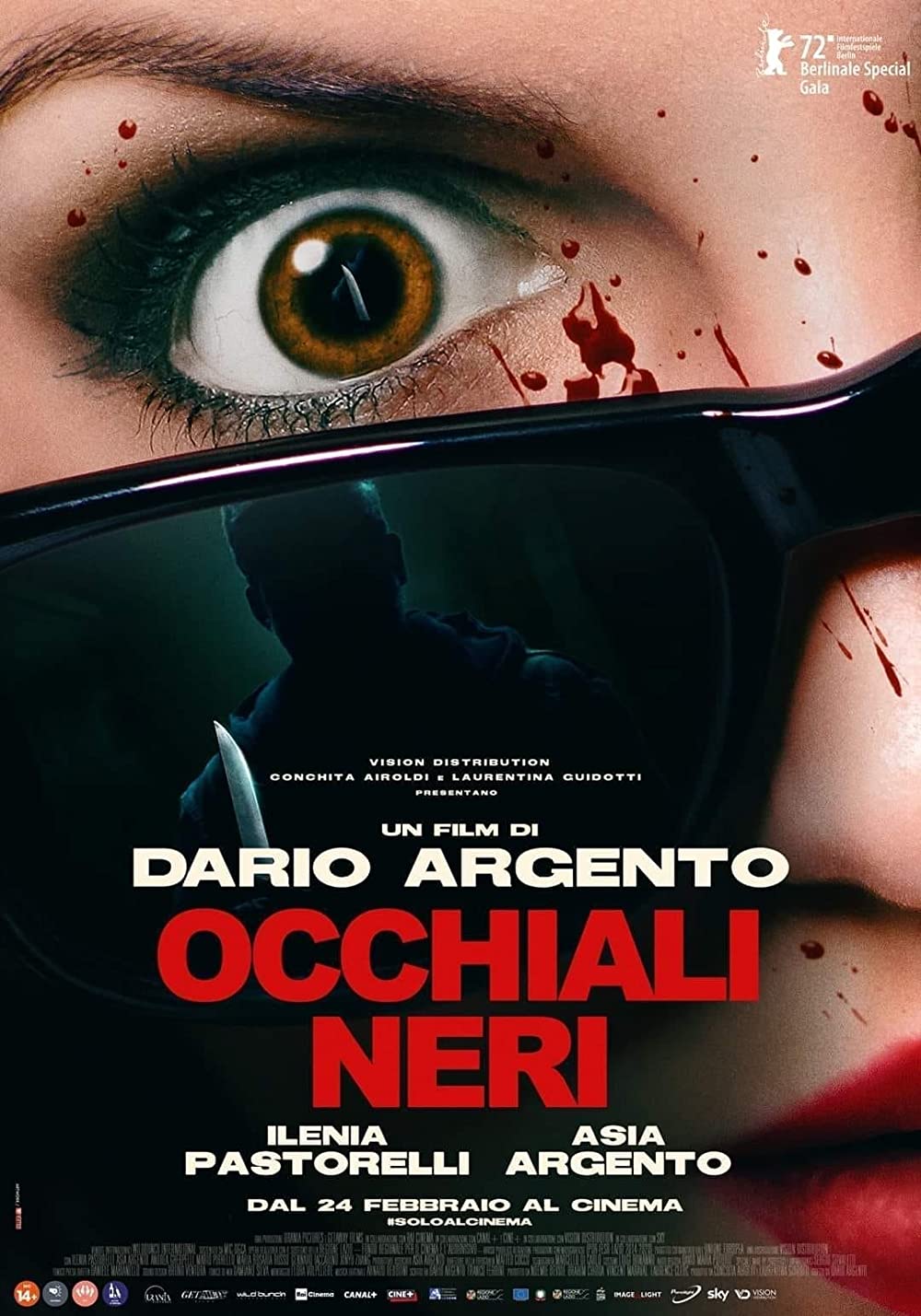
Occhiali neri

Dario Argento making his first movie in ten years should be an event. One of the major genre directors of the seventies and eighties returning to cinema for the first time in a decade would, ideally, be cause for celebration. Of course, Dario Argento's reputation in the modern age is more complicated than that. While few people can agree on when he last made a good movie, most understand that Argento isn't the filmmaker he used to be. Whether you consider 2012's “Dracula 3D” entertaining camp or an utter fiasco, it was hardly a dignified note for the director of “Suspiria” to end his career on. When “Occhiali neri” was first announced, I was skeptical it would even make it to theater screens. Once it was apparent the movie was actually coming out, I still remained cautious. I figured it was best not to get my hopes up. Now that “Dark Glasses,” as it's now known in English, is out and streaming on Shudder, it's time to determine if my apprehension was well placed or not. 

Diana is a high-class call girl going about her life in Rome. While fleeing a violent client, she is pursued by a serial killer who has been targeting sex workers all throughout the city. The chase concludes when she crashes her car into another vehicle. The wreck leaves Diana blind and kills the two adults in the other car, leaving only a boy alive. Diana attempts to rebuild her life as a newly blind woman. She feels guilty about the deaths and finds the boy, a Chinese immigrant named Chin, at an orphanage. The boy sneaks away to live with Diana, intrigued by the woman. They form an odd friendship... But the danger is not over. The killer is still at large and eager to reclaim the victim that got away from him. 

“Dark Glasses” is probably the best film Dario Argento has directed since the early nineties, which is admittedly the faint praise. It is a modest little giallo, not especially beholden to the director's past hits but vaguely reminiscent of many of them. There's a black-gloved killer, several scenes being told from his murderous perspective. A normal person who has, through bad luck, fallen into the position of detective must unravel the mystery before its too late. Though she doesn't do much investigating, instead the killer revealing himself to her. There's a pulsating synth soundtrack and stylized, close-up murder scenes. “Black Glasses” is an example of a director returning to the genre that he defined, playing again with the tropes and themes he started out with fifty years ago.

What does stand out about “Dark Glasses” is how charming the central relationship proves to be. When I first read the plot synopsis for the film, I thought it sounded like a giallo version of “The Life Before Us.” A bond between a sex worker and an orphaned immigrant child is so specific that I can't imagine this wasn't an intentional reference. Sentimentality is not something I really associate with Argento. Yet the bond between Diana and Chin proves somewhat touching. They come to rely on each other. I admire the script – co-written by Argento – for not mining cheap plot twists out of Diana withholding information from the boy. Instead, the guilt she feels for her role in his parents' deaths is what motivates her. You understand why these two come to rely on each other and it's fairly well done.

Considering the accusations of misogyny that have frequently been directed at his films, you don't expect a Dario Argento movie to feature the most sensitive portrayal of a sex worker. “Dark Glasses” surprised me in this regard. The film doesn't judge Diana for her job and treats it very matter-of-factly. Her clients are neither good-hearted suitors nor brutish sleaze balls. When her johns are abusive, that's when Argento utilizes the first-person perspective camerawork he's famous for... Only to have the attacker – and thus the audience – maced in the eyes. If that alone doesn't align the viewer's sympathies with Diana, the time the film devotes to her recovery and adapting to her blindness is surprisingly well thought-out. 

I don't think Diana's profession was chosen just for titillation factor or simply because it's a job that puts women in danger. In the second half of the film, she talks with Chin a lot about his mother. This can't help but make me wonder about the duality of the Mother and the Whore. (A dichotomy that is deeply ingrained in Italian culture, least we forget.) Diana winds up becoming something of a surrogate mother to the boy. Yet this doesn't overtake her profession either, as she continues sex work after becoming blind. Chin seems fine with her line of work. I don't know if “Dark Glasses” ever comes to a concise point about this topic. It's not really that kind of movie. But it is clearly an idea floating around in its head. It's another interesting angle to the story.

I think that's what I liked the most about “Dark Glasses.” There's a number of quirky ideas and themes bouncing around inside the narrative. You get the impression that Dario was interested in exploring something here, outside the standard genre framework of its story. Before the story gets moving, there's a brief scene where a bunch of people – Diane included – look up at an eclipse, wearing dark glasses for fear of going blind. There's a brief line bout how primitive cultures thought eclipses where signs of the apocalypse. Is this just foreshadowing? Or does it build into the idea of Diana being plunged into a world of darkness? The eclipsed sun even looks like the lens of a pair of glasses. What about the killer repainting his van from black to white, so that a brightly colored shape is one that foretells doom to Diana in her new shadow-filled world. Again, it's hard to say if there's a definitive point to these ideas but I'm intrigued by their presence nevertheless. 

An interesting reoccurring theme in Argento's early movies were the use of animals. This returns in a big way in “Dark Glasses.” Shortly after loosing her sight, Diana acquires a seeing eye dog named Nerea. She bonds with the furry creature quickly and it even protects her on multiple occasions. This is not the only time dogs appear prominently in the film. In the second half, it's revealed the killer has a connection with canines. Considering his sexist motivations, is this some commentary on how men are “dogs?” If so, why does Nerea end up saving the day too? The idea is definitely muddled yet it's interesting to see Argento, in a round about way, pay homage to the dog-centric scenes from “Suspiria” and “Tenebre.” And the German Shepherd playing Nerea is definitely a very good boy.

While Argento's best films have always been elevated by artistic, high-minded ideas, ultimately it is the stalk-and-slash scenes that he'll always be most remembered for. From time to time, to my pleasant surprise, you can see some of the old Dario in “Dark Glasses.” Probably the most stylish, suspenseful moment involves two detectives running into the killer outside Diana's apartment. Set in the tight corridor and lit largely by the van's headlights, there's some nicely unexpected camera angles in this scene. As well as a close-up of a knife blade penetrating a back. Later on, there's a mildly suspenseful chase, the camera gliding over and around the walls as our heroes run for their lives. It's not bad.

Granted, you still see signs of the tacky elements that sadly characterized most of Argento's work in the last thirty years. The first murder scene is a decently executed garroting, that sadly concludes with an ugly close-up of blood spurting from a very fake looking wound. The rushed climax is centered on some ridiculous looking gore effects too, with latex looking skin. The entire last act of “Dark Glasses” is an extended chase scene and it feels a bit aimless. Especially a totally gratuitous sequence set in a river, featuring some unfortunately CGI snakes. Still, compared to the gaudy excess and hideous effects in “Dracula 3D' and “Phantom of the Opera,” “Dark Glasses” still ranks as fairly restrained and well-balanced by modern Argento standards.

Also breaking from the traditions that have characterized Argento's work since the eighties, “Dark Glasses” does not star Asia Argento. She appears in a supporting role as the social worker who helps Diana get back on her feet, looking naturalistic and almost unrecognizable. Instead, Ilenia Pastorelli stars. It's an occasionally theatrical performance, Pastorelli sometimes going a bit into histrionics. Yet she has an easy-going charm as well, a lived-in quality that gives character and depth to Diana, making her seem more alive. She has good chemistry with Xinyu Zhang as Chin. Zhang is, honestly, fairly awkward as the young boy. His line delivery is hammy or stiff from time to time. It didn't distract from my enjoyment of the film or its characters but this is definitely an example of a miscalculated child actor.

When “Dark Glasses” was first announced, Daft Punk was announced as composing the score. That would have been quite a collaboration to imagine. Sadly, the wildly popular French electronica duo broke up before the movie could go into active production. Instead, another French pop musician in the form of Arnaud Rebotini was recruited to provide the tunes. Rebotini was definitely inspired by the classic Goblin scores of Argento's seventies masterpieces. The main theme is characterized by resounding bell-like tones and building synths. Rebotini incorporates a little more dance music flavor, via some thumping bass, than Claudio Simonetti probably would've used. But it's a solid score, that definitely helps raises the tension throughout the film. It's pretty catchy too, as far as these things go.

Some may accuse Argento's best movies of having abrupt endings. The likes of “Deep Red,” “Tenebre,” and “Suspiria” basically end right after the killer is defeated. This might be identified as a weakness but anytime his films have an epilogue, as in “Opera” and here, it always feels unsatisfying. “Dark Glasses” concludes on a weirdly downbeat and hopeless note. This is just the most glaring example of how it's a flawed film. Yet “Dark Glasses” still managed to exceed my measured expectations. I don't want to say Argento is back. Considering his age, who knows if he'll even make another movie. (Though he notably did act in a Gasper Noe movie this year as well, so maybe Dario caught the movie-making bug again.) Yet his comeback vehicle suggest the old master still has some of that old artistry in him. [Grade: B]

Tuesday, December 27, 2022

Director Report Card: David Cronenberg (2022)


When David Cronenberg's “Map to the Stars” came out in 2014, it was the latest in a critically acclaimed run of psychological dramas from the man once known as the King of Venereal Horror. It was also, sad to say, one of the director's weakest films. For eight long years, it seemed like that might be the final statement from the director too, as he suggested a while back he might even be retiring. Luckily, some financial backers decided we needed more Cronenberg in our lives. The director would make his return this year, in more ways than one. “Crimes of the Future” took its title from a 1970 student film and would be adapted from a script he wrote in 2003 called "Painkillers." These were both clues that the director would be returning to the body-horror that first made him famous, making the new “Crimes of the Future” an event for a certain breed of cinema-loving weirdos.

Set in a world where scientific advances have widely eliminated the ability to feel pain, and pollution has led to bizarre physiological mutations, “Crimes of the Future” follows performance artist Saul Tenser. Saul grows superfluous new organs on an almost nightly basis, which have to be tattooed and cataloged by the government. As part of his act, he has the organs removed while laying in an elaborate robotic machine originally designed to perform autopsies. Saul is contacted by the father of a murdered son, part of an underground culture of people who have evolved to digest inorganic material. Saul is asked to perform a public autopsy on the dead son. He's also contacted by a government agency created to investigate these new evolutionary changes.

As a long time fan of Cronenbery's early horror movies, I was always a little disappointed in the way he drifted away from the more extreme side of his style. Don't get me wrong, I think “A History of Violence” is great and even found plenty of things to like about “A Dangerous Method” or “Spider.” Yet those latter films always felt like Cronenberg had made a conscious choice to move on from the grisly material that defined him and onto more prestigious material. “Crimes of the Future,” I am happy to say, is a proud return to the mutated flesh and kinky sex that defined Cronenberg's earlier films. In fact, “Crimes of the Future” is such a distillation of what we think of when we think of Cronenberg that it borders self-parody at times. It's full of pulsating organs, throbbing growths, and people being enamored – erotically and socially – of these bodily mutations.

If all of Cronenberg's movies have been about the internal becoming external – whether via throbbing tumors bursting through the skin or psychological delusions inflicting themselves on reality – then “Crimes of the Future” moves this idea into an interesting, new direction. In this future, evolution has become a revolutionary act. Environment pollution, such as the proliferation of microplastics in the drinking water, has caused people to develop the ability to digest such material. Like Seth Brundel or the creators of the “Videodrome” signals before them, these mutants consider themselves a bold new step in human biology that deserve to exist. It almost plays like satire of political ideology, something so absurd and bizarre becoming the basis of an underground movement. Yet “Crimes of the Future” feels fairly sincere in its exploration of the idea that a changing world means our definition of humanity must eventually change too.

Yet this is only one aspect of the film. Like all performance art, Saul Tenser and his contemporaries force us to ask what the nature of art is. Saul's act involves laying in a bizarre machine, which cuts out his new organs and then puts them on display. It's an action that the film approaches with scientific detachment, squishy wet innards simply being laid on a table next to Saul's contraption. Yet the audiences love it, Saul being treated as a celebrity of sorts. He has fans, who regard him with hushed awe, and even an attempted groupie. There's also some creative disagreements with his partner, Caprice, suggesting all of this is meant to be an absurdist riff on performance art pretensions by Cronenberg.

At the same time, I think a clear point is being made here. Saul looks at other, similar artists with some bemusement. Another performer has sewn his eyes and lips shut while sprouting ears from his whole body, before dancing for an audience. Saul seems unimpressed with such theater and it's not too hard to guess why. Saul literally pulls his guts out before an audience and shows them off, as direct a metaphor as one can think of for the act of being a creative person. His art dictates his life, his body literally changing around him as his creative impulses shift. The pain he feels from his body mutating keeps him up at night. And if he doesn't perform, and have these strange new organs cut out, he'll die. Inside “Crimes of the Future” is a potent metaphor for the creative progress.

If “Crimes of the Future” has us asking what art is, it also prompts us to wonder what sex is. The most quotable line in the film is “Surgery is the new sex.” We see this play out rather literally. In a world where pain isn't a factor, people slice open their flesh and probe their fingers inside their partner's skin. They all seem pretty into it. Saul and Caprice share an intimate moment inside his autopsy pod, while the little blades cut into them. In this world, it seems bodily penetration has taken on all sorts of new forms. It's a rather obtuse metaphor for how technology can change sexuality. Is internet cyber-sex the distant ancestor of the extreme forms of sensual exploration seen here? If "Crimes of the Future" is all about how humanity evolves, it seems unavoidable that our definition of sex would evolve too. 

Yet I don't think Cronenberg is including these images of bizarre, sadomasochistic paraphilias just to explore his film's theme. I think he likes them. "Crimes of the Future" is maybe the director's kinkiest movie. The cold, scientific detachment that characterized the NC-17 humping in "Crash" isn't present here. Instead, the focus is on the participants' faces, on the obvious pleasure and passion they feel. When Saul has an organic zipper installed that allows easy access to his innards, Caprice uses it to essentially go down on him. In a moment that recalls the motor oil slathered threesome from "Fast Company," a duo of minor characters, technicians for the film's bizarre technology, are so enamored of Saul's vintage autopsy pod that they strip down and crawl inside together. It really seems to me that these moments are here mostly because Dave thinks they are sexy, funny, or both. The protagonist himself admits he's not good at the "old sex" and you wonder if he's speaking for the filmmaker in this scene too. "Crimes of the Future" is, in its own bizarre way, a celebration of alternative sexual practices. 

Of the many classical Cronenberg ideas explored here, one seems a little less essential than the others. The government investigator who interviews Saul from time to time never really contributes much to the story. The eventual conspiracy that forms around the plastic eaters seems to exist mostly as a way to resolve that particular plot point. Both of these subplots are bluntly forgotten by the time the somewhat abrupt ending arrives. It feels like some aspects had to be cut short for time or budgetary reasons. "Crimes of the Future" is mostly a short visit to this strange world and not all of its ideas are as thoroughly explored as they could or should be.

There are other clues that, perhaps, the budget here was a bit limited. The various devices seen throughout "Crimes of the Future" recall the biomechanical game console of "eXistenZ." Saul sits in a chair that constantly shifts his body around as he eats, whose armrest and spindles resemble shifting, waxy bones. The autopsy pod is like an enormous crustacean structure, with plated appendages that reach inside. This stuff looks pretty cool. Yet the squishy organs look more rubbery and less convincing. This is especially true of the corpse that appears prominently in the last act, that looks very artificial. A splashy gore gag, which feels like something from Cronenberg's seventies movies, looks fairly chintzy too. It's clear that there was only so much money and resources available for the make-up effects.

While the part was nearly played by Nicolas Cage back when the project was still called "Painkillers," a collaboration that is wild to imagine, ultimately Saul Tenser would be brought to life by Virgo Mortensen. His fourth appearance in a Cronenberg movie, it's clear by now that Viggo's sensibilities line up with his director. Spending most of the movie in an obscuring black hood, Mortensen constantly coughs and clears his throat throughout the film. While it's a performance full of eccentricities, Viggo is always compelling. The physical aspect of the part, the constant discomfort Saul feels, is well conveyed while the actor brings a wry humor to many of the film's weirder scenes. 

Mortensen has good chemistry with Léa Seydoux, who plays Caprice. She brings a quiet intensity to the role, seeming very serious about everything the film presents with her. Kristen Stewart – whose appearance in a Cronenberg movie felt inevitable at this point – has a supporting role, as a government worker who classifies Saul's new organs. Stewart brings a nervous, uneasy energy to her performance that plays off the other actors in the film nicely. I've never given much thought to Scott Speedman before but he does a decent job as the father of the murder son. Don McKellar, as the New Vice investigator, is also charming in his handful of scenes.

”Crimes of the Future” is not a new masterpiece in the Cronenberg canon. Often, it feels like the director just having fun exploring the themes and images he's been best known for in the past. But being a fan of Cronenberg's body-horror filled tales of weird sci-fi, I did enjoy seeing him mess around with these familiar toys. “Crimes of the Future” has a bit of a shaggy script but is still tightly paced, with more far-out ideas than many directors cover in their entire careers. One can't help but wonder if “Crimes” feels this way because the director was easing himself back into filmmaking after a long hiatus. He already has a follow-up in the pipeline, so hopefully it won't take as long for a new Cronenberg feature to be unleashed. “Crimes of the Future” is weird, conceptual, kinky, gory, and endlessly intriguing even if some parts of it hold together better than others. [Grade: B]

Monday, December 26, 2022

Series Report Card: Disney Animated Features (2022)


In the early 2000s, emboldened by the popularity of anime in the states, three big budget, sci-fi/action animated features would be released in America by major studios. They were "Titan A.E." – a Don Bluth/Fox production – "Atlantis: The Lost Empire" and "Treasure Planet," which were both Disney productions. All three were box office failures, signaling the end of traditional animation as a popular medium in U.S. cinema. It also suggested that mainstream audiences didn't have much interest in science fiction cartoons. (Cult audiences, meanwhile, quickly embraced all three.) It's been twenty-two years and, despite these past failures, Disney seemed ready to try a similar experiment again. "Strange World," a CGI animated film, would see the world's most famous animation studio trying their hand at telling another expansive science fiction story.

Jaeger Clade is the most celebrated explorer in all of Avalonia, a country surrounded by an impenetrable wall of mountains. Jaeger is determined to make it to the other side of the mountains, much to the chagrin of his meek son, Searcher. During the same mountainous expedition Jaeger disappears, Searcher discovers an electricity-producing plant he names Pando. Twenty years later, Pando has made Avalonia a technologically advanced utopia. Yet Searcher notices that the plant is losing its effectiveness. The President of Avalonia soon arrives to tell him that Pando is dying at its root, deep within the earth. Searcher joins an expedition into the planet's heart to reverse the problem before it's too late. His rebellious teenage son, Ethan, stowaways on the vessel as it descends into the bizarre world under the surface. Along the way, Searcher is reunited with his father.

"Strange World" draws inspiration from the pulp science-fiction magazines of the early 20th century. It features a lot of the same themes and ideas present in those old stories. The time period for the story is never specified, with many modern touches existing alongside a vaguely 1920s style aesthetic. Jaeger Clade is exactly the kind of stout-chinned, two-fisted hero that was common place in such stories. The premise of a fantastical world within the earth, that the heroes uncover from inside amazing flying machines, obviously recalls the works of Jules Verne. The same sense of classical adventure and discovery that inspired those works clearly drove the filmmakers behind "Strange World."

Visually, "Strange World" also pulls from the colorful, elaborate paintings that would adorn the covers of those same pulp magazines and novels. The otherworldly creature designs, full of tentacles and strange protuberances that replace eyes and ears, would not look out of place on the covers of "Amazing Stories" or "Weird Science." There are several moments when the film intentionally pauses on an image. Such as during the opening montage that establishes Jaeger and Searcher's relationship or a single shot of Ethan standing on a vehicle and overlooking the inner world. These shots have a depth and color to them that clearly recalls painted illustrations.

What maybe impressed me the most about "Strange World" is the imaginative world building on display. There's so much cool stuff packed into this film. The society that thrives on the planet's surface is really clever. The invention of Pando produces a number of miraculous machines and technologies that take the place of modern conveniences, like airplanes and automobiles. There's flying machines that hover along the skyline, powered by these little glowing Brussels sprouts. While not meeting the definition of "steampunk" or "dieselpunk," it feels drawn from a similar vein. The film imagined a world that is set in the past but pushed forward into the future by technology unavailable in our time.

Once the trip into the planet's interior begins, "Strange World" gleefully lives up to its title. You can tell the designers and animators really had fun cooking up increasingly odd alien life forms. Some of the creatures are clearly inspired by animals that live on our world. The antagonistic "Reapers" resemble pterodactyls made of swirling, red fabric like matter. There are creatures that move around like gazelles but have a mass of twitching tentacles in place of heads. Others are stranger yet, resembling floating nudibranches or ambulatory landscapes. There's lots of polyps and blob-like membranes. I never expected to see a big budget Disney movie so obviously influenced by "Fantastic Planet" and yet here we are.

A film so clearly interested in natural life forms and creating its own biosphere, unsurprisingly, brings with it an environmental message. Without going too far into spoiler territory, it's eventually discovered that the goals the characters have run counter to what is best for their civilization in the long term. The message boils down to all of us being part of a massive, living system. And we all owe a responsibility to that system, to take care of it and ensure that it lives on for future generations. This moral includes an evident anti-fossil fuel statement. It comes close to being too obvious at times – a card game Ethan plays presents the theme of peacefully co-existing with the world outwardly – but I think the point is well organized and timely.

Yet even this is not what "Strange World" is really about, at least not singularly. Perhaps unsurprisingly, a lot of Disney movies over the years have focused on the relationships between parents and their children. The studio's Marvel superhero flicks have especially foregrounded conflicts with fathers. "Strange World" similarly wears its Daddy Issues right on its sleeves. Jaeger and Searcher never really bonded, as the son felt inadequate in his boisterous father's shadow. A boy more interested in science and agriculture didn't find a lot of common ground with this proud adventurer. When his single-minded focus on reaching the other side of the mountain led to him disappearing for two decades, Searcher felt truly abandoned by his dad. It confirmed all his worst fears about his dad. Their reunion inevitably has them putting their differences to rest and learning to appreciate one another.

This subplot is at its most compelling when illustrating the ways that, no matter how divided Searcher feels from his dad, they are similar people. Both have single-minded visions for their own sons, Searcher hoping Ethan grows up to be a farmer like him despite the boy having more in common with his explorer grandfather. This is illustrated in an amusing scene that shows the two men unknowingly mirroring each other's movements. As someone who has sometimes struggled with his own father, and accepting that he's part of me no matter how much he's let me down, I can't help but be a little touched by this. It has a tidy Disney movie resolution but I appreciate "Strange World" even touching on the idea. Maybe we should all be a little more forgiving of our bad dads. 

Something that Ethan doesn't bristle with his father or granddad about is his sexuality. After Disney promoted a number of minor instances of vaguely queer characters in the past as big deals (that could be easily excised from international releases), "Strange World" is the first film from the Mouse Factory that actually features a prominent gay character. Ethan has a crush on a boy he knows. The other boy probably likes him too and they are working through their teenage awkwardness together. The topic is brought up repeatedly and without any judgement. The movie doesn't draw a lot of attention to Ethan's queer status, simply letting a gay teenager exist in its narrative as a normal thing that requires no further trumpeting. It's surprising and unexpected, to see a big budget family movie allow a main character to be gay, outwardly and openly, to exist and live and love the way it would any heterosexual character.

As much as I liked "Strange World," there is one issue facing the film. As soon as I saw the trailer, I noted a number of distracting one-liners and quips. This, unfortunately, was not just the trailer overemphasizing the pithy dialogue. "Strange World" has jokes in and they are mostly pretty lame. It's the kind of lazy, sitcom-level dialogue that feels desperate to get the audience to laugh. This is what you expect from the lesser Dreamworks movies and it makes the film seem insecure about its sci-fi story and family drama. The only moment in the film that really got me to laugh was a sequence where the three-legged dog – one of two adorable animal sidekicks – is called upon to help the heroes escape a situation. 

The voice cast do an admirable job though. Jake Gyllenhaal has a likably nervous quality as Searcher, a man certain about many things but constantly forced out of his comfort zone. He has strong chemistry with Dennis Quaid as Jaeger, who does a suitable job summoning the classic adventurer hero energy, and Gabrielle Union as his resourceful wife. Jakoubie Young-White is also nicely suited to the role of Ethan, definitely bringing the right youthful quality to the part. Lucy Liu plays the President of Avalonia who, in a lesser film, would be the antagonist of the story. Instead, she's simply someone working from her own preconceived notions that are challenged throughout the narrative. 

Much like the sci-fi action/adventure Disney cartoons that proceeded, "Strange World" was doomed to die a lonely death at the box office. I'm not sure we can blame any disinterest America's youth has in sci-fi animation on this though. Instead, "Strange World" flopped because the studio didn't do a very good job of promoting it. I've seen countless complaints from people that they didn't even know the movie existed and Disney barely produced any merchandise for it. Whether this was because of a change in studio leadership, the film being released between bigger Disney productions "Black Panther: Wakanda Forever" and "Avatar 2," or a strange modern disinterest from Disney in animation, I don't know. (There have also been conspiracy theories that the studio intentionally buried the movie because of its gay lead, which seem sadly believable.) I think "Strange World" will be rediscovered on streaming though, as it's an imaginative and entertaining motion picture that deserves to be seen. [Grade: B]

Saturday, December 24, 2022

CHRISTMAS 2022: The Leech (2022)


Let us consider the career of Jeremy Gardner. As a director, Gardner made low budget zombie fave “The Battery” and quirky creature feature “After Midnight.” As an actor, he's appeared in films from indie horror auteurs like Benson and Moorehead, Mickey Keating, and the aforementioned Joe Begos. (In fact, he even popped up in “Christmas Bloody Christmas.”) He also appeared in “Sadistic Intentions,” a film from director Eric Pennycoff. I haven't seen that one or even heard of it before. Yet I felt compelled to check out “The Leech,” Pennycoff's follow-up, anyway. Perhaps that's because I like Garnder or maybe it's just because it's a Christmas-set horror movie that's not about Santa or the Krampus or anything like that. It's nice to have some variety in the holiday horror genre.

Catholic priest David leads a congregation of exactly one, with his assistant Rigo seemingly being the only person who attends his church at all. On the way home from another practically empty sermon, David meets Terry. Following an argument with his girlfriend, the foul-mouthed Terry is facing homelessness. David decides to take the man in, despite his obnoxious habits and vulgar opinions. It's almost Christmas after all. Soon afterwards, Terry reconciles with Lexi, his girlfriend. She moves into David's house too. As the holiday draws closer, David finds his capacity for forgiveness and charity tested by his increasingly depraved house guests. They'll continue to challenge the priest's resolve, pushing him further to the edge of sanity.

“The Leech” has a clever set-up for a dark comedy that quickly pushes towards horror. David endeavors to live his life like Christ. He wants to help the helpless and is happy to invite Terry, someone who has fallen on hard luck, into his home. Yet this is a house guest that quickly pushes the limits of Christian charity. It’s an easy story to relate to, of wanting to help someone but also wanting to protect your own sanity. Most of us have experiences with guests that have overstayed their welcome and “The Leech” pushes that as far as possible. Terry refuses to respect boundaries, blaring heavy metal throughout the day and night, constantly swearing, and seemingly delighting in exposing the priestly David to drugs, alcohol, and sexual acts. Under these circumstances, we’d all crack eventually. 

This puts us in David’s corner. Clearly, Terry and Lexi are the villains in this scenario, right? Yet “The Leech” has a nice layer of ambiguity to it, by slowly revealing that David is not all he appears to be. There’s a suggestion that his current puritan lifestyle was born out of a past as a partying homosexual. (Which the film nicely doesn’t explore too much, leaving the audience to wonder.) When the topic of Lexi being pregnant comes up, David goes on a disingenuous anti-abortion rant. After the house guests push him too far, David begins to enforce his own morality on them in creepy ways. Yes, he seems to have some hang-ups about his dead mother too. “The Leech” shows all of its central trio slipping into depravity and instability, making this more complex than just a story about uninvited guests driving you nuts. 

David does get driven nuts though. He slips more and more into madness as “The Leech” goes on, the film getting more hallucinatory as the violence and embittered speeches get more intense. Pennycoff’s direction is strong during these moments. He makes good use of Christmas lights for mood coloring and has a good handle on dream logic. (Even if the cinematography is a bit too dark in general.) Yet “The Leech” does loose its footing some the more out there it gets. Luckily, the performances remain compelling. Graham Skipper has a pleasant avuncular quality as David. Watching his kind exterior slowly melt away towards bitterness and madness is rewarding. Jeremy Gardner goes amusingly over-the-top as Terry, clearly relishing a chance to play a character who disregards all tact and good taste. 

"The Leech" does have its fair share of Christmas atmosphere too, even if it's only tangentially about the holiday. The story of someone striving to be Christ-like during the holiest of seasons, and eventually failing spectacularly, touches on the meaning of the day more than most December films do. Coming in at a compact 87 minutes, "The Leech" doesn't overstay its welcome the way its characters do. It's an amusingly nasty dark comedy that satisfied my desire for a twisted spin on the Christmas holiday. [7/10]

Wednesday, December 21, 2022

CHRISTMAS 2022: Christmas Bloody Christmas (2022)


If you follow the independent horror scene, you've probably heard the name Joe Begos. Begos started to make a name for himself in 2013 with sci-fi slasher flick, “Almost Human.” By 2015's “The Mind's Eye,” his aesthetic started to emerge. Begos makes throwback horror flicks that are heavy on the gore, neon lighting, colorfully and profane dialogue, with soundtracks that alternate between synths and heavy metal. His movies are often frequent homages to Fangoria favorites of the past. “The Mind's Eye” was obviously inspired by “Scanners,” “VFW” clearly drew from “Assault on Precinct 13,” “Bliss” was his riff on “Driller Killer.” Unfortunately, I've yet to see a Begos movie I've actually liked, as I find his style to be self-indulgent and obnoxious. Yet when I read his next film was a seasonal slasher named “Christmas Bloody Christmas,” I knew I would once again take a chance on a Begos joint. 

Should we continue to discuss “Christmas Bloody Christmas,” we must accept the main facet of its premise: That military contractors have created highly advanced, humanoid robots for war-time operations and then, for some reason, re-purposed them as utterly life-like Santa Clauses for toy stores. One such robot is residing in a toy store, near the vinyl/video stores Tori and Robbie work at. On Christmas, they head out for a night of drinking and partying. That's when the Santa robot reverts back to its murderous programming. The machine goes on a killing spree, targeting Tori's friends before following her back to her sister's place. The ax-wielding mechanical Claus chases her to the police station afterwards, turning December 25th into a blood-soaked nightmare.

“Christmas Bloody Christmas” represents Joe Begos' style at its most self-indulgent. Nearly the entire first half-hour is devoted to Riley Dandy and Sam Delich, as Tori and Robbie, trading self-consciously vulgar dialogue. They talk about drinking, sex, music, and horror movies. To make sure the hardcore genre fans in the audience know Begos is One of Us, “Pet Sematary Two” and the Crypt-Keeper Christmas album are among the discussed topic. (Alongside oral sex, analingus, and Lemmy.) “Fuck” is seemingly every other word. Nearly the entire film is lit in neon and blurring metal and synth fill out the soundtrack. And, as in Begos' previous films, this is a blatant homage to a certified genre classic. In this case, it's “The Terminator,” which is obvious when the Robot Santa attacks a police station and then reveals a robotic skeleton under its human-like skin. 

Now, it's a matter of opinion whether you find any of the above charming. Personally, I mostly find it incredibly irritating. Dandy and Delich do not make these broad, loud characters endearing. The non-stop profanity is just another facet of their aggressively in-your-face personalities. Horror movies don't have to have likable characters but, when trying to raise tension or create thrills, it helps. When you don't care about whether these people live or die, it's hard to be too invested in anything that happens. This means “Christmas Bloody Christmas” is mostly one of those slasher flicks that's just about gory special effects. Sadly, those aren't too impressive here either. The robotic Santa mostly executes people with simple axe swings, the dismembered bodies and crushed heads looking very rubbery and fake. 

I can't help but feel like “Christmas Bloody Christmas” is not a film that's meant to be taken seriously. The robotic Santa premise is absurd, after all, and the plot is full of contrivances. The fake looking gore and loud-mouthed characters further suggests this is a horror/comedy of sorts.  Yet if that's the case, the film is never especially funny. Its horror sequence are largely grim and downbeat, including the death of a child. The second half is a relentless chase scene that goes on and on, the robotic Santa pursuing Tori until the final seconds of the movie. In fact, I was left wondering why it's a killer Santa movie at all. The murderous Claus doesn't do anything festive or seasonal, not even speaking a ho-ho-ho. For that matter, why is this a robot movie either when all the murders are done with an axe? A regular person can kill people with an axe! Aside from robotic sound effects, the killer looks and moves like a normal person throughout most of the film. Kind of defeats the purpose of the idea, don't you think?

In other words, “Christmas Bloody Christmas” feels like a half-assed attempt at yuletide mayhem  to me. It doesn't really utilize any of its defining gimmicks in meaningful ways. The story feels directionless and the pacing is meandering. Really, the entire film feels like an exercise in Joe Begos just putting random shit he likes into a movie, wrapped up around the loose theme of a Christmas slasher flick. And that's great, for Begos and the folks that share his enthusiasm for screaming fuck, debating the quality of horror sequels, and floppy fake body parts. I can't count myself among this crowd though. A lot of people seem to enjoy this one so to each their own. [5/10]

Tuesday, December 20, 2022

CHRISTMAS 2022: Violent Night (2022)


Subversive Christmas cinema continues to evolve. Killer Santa movies are a dime a dozen. Action movies setting their chaos around the holidays has long since been enshrined in the hall of cinematic clichés, thanks to a certain ever-debatable seasonal classic. Raunchy Yuletide comedies were having a moment for a while, though they’ve fallen a little out of favor recently. None of these premises are especially novel on their own… But a combination of all three? Now that’ll get some butts in seats. One imagines this was the thought process that got “Violent Night,” an action flick putting the literal, mythical Santa Claus in place of John McClane, the greenlight. The script would come from the team behind the likable "Sonic the Hedgehog" movies while Tommy Wirkola, an expert in snowbound carnage, was in the director's chair. I want to say that creative team piqued my interest but the truth is the premise of "Die Hard Starring Santa" would've been irresistibly trashy regardless of who made it. 

After a thousand years of delivering gifts, Santa Claus is feeling a little blue. The increasingly materialistic, cynical world has him considering hanging up his jingle bells for good. On what might be his final Christmas, he stops at the mansion of rich industrialist family, the Lightstones. That's when a group of vicious mercenaries, led by a villain calling himself Mr. Scrooge, set their plan to steal three hundred million dollars in intractable bills into action. The gunfire scares off Santa's reindeer, stranding him in the besieged home. That's when Santa gets in contact with Trudy, the youngest Lightstone who only wants her mom and dad to get back together. The two communicate as the not-so-jolly old elf embraces his violent past to save the family from the ruthless robbers. 

“Violent Night” comes to us from 87North Productions, the company founded by David Leitch.to expand the action empire he started with “John Wick.” Of course, Leitch also directed the second “Deadpool” movie. Tonally, this Santa slaughter flick is much closer to the comedic superhero saga than Keanu Reeves shooting a hundred guys in the face. “Violent Night” has a similar tendency to be too impressed with its own outrageousness at times. One of the first things that happens here is Santa Claus puking on someone's face. The extended members of the Lightstones family are all exaggerated terrible people who speak mostly in obnoxiously overwritten, profane dialogue. Some of the characters, such as the Mark Wahlberg-like fiancée or a crazed henchman played by Brendan Fletcher, are utterly cartoonish. Considering the premise here, I guess it was inevitable that “Violent Night” would go over-the-top but the movie is definitely trying too hard to be edgy at times, instead of just letting the ridiculousness of its concept play out on its own.

“Violent Night's” glib violence, colorful vulgarities, and in-your-face characters stand in stark contrast to the relationship at the center of the story. You see, Trudy Lightstone is an adorable little moppet. Her love of Christmas and belief in Santa are utterly sincere. It's her precious earnestness that thaws Santa's cynicism and makes him love Christmas again. “Violent Night” plays this story arc totally straight, with nary a wink. While I suppose the movie could be applauded for committing to its status as a heartwarming Christmas movie and an ultra-violent action movie, the two tones jive badly in my eyes. It's really hard to take any of the movie's sentimental sense seriously at all when the rest of it is so utterly sarcastic. 

Regardless of whatever bumpy tonal issues occur throughout “Violent Night,” the film is at its most entertaining when embracing its intended goals as a gleefully over-the-top action movie. The creative team definitely had the most fun when juxtaposing wholesome Christmas decorations and winter traditions with the most violent executions they could conceived. Tensile, Christmas lights, a tree topper, and a nutcracker are utilized as weapons. “Home Alone” is reprised as a grisly gore-comedy. Once Santa picks up ice skates and activates the snowblower, “Violent Night” truly lives up to its title. While the action theatrics aren't quite up to the heights of 87North productions like “Atomic Blonde” or “Nobody,” they are pretty damn cool. There's some theatrical flips, brutal collisions, and some balletic fisticuffs. Once the snowmobile chases and explosions kick in, Wirkola's handle on the action is especially sturdy. 

For such a particular take on Santa Claus, a very specific type of actor was required. David Harbour strikes the right balance. He's believably holly jolly in some regards, even if this Santa is clearly grouchier and more intoxicated than most. He's also a creditable action lead, a burly looking guy that is physically imposing in a fight. Harbour's comedic chops are fine too and he manages to get a few laughs. As the villainous Mr. Scrooge, John Leguizamo happily hams it up and makes a fitting foil. Leah Brady is adorable as Trudy, precocious but not syrupy. Many of the supporting cast members go way over the top. Beverly D'Angelo as the Lightstone matriarch is especially cartoony, with Cam Gigandet's buffoonish character and much the henchmen being similarly ridiculous. (Though I kind of like the Dolph Lundgren-like Andre Eriksen.) 

By the end, “Violent Night's” mixture of gory action and crude yuletide comedy had won me over. Once the movie focuses on the premise of “Die Hard starring Santa Claus,” it really finds its hyper-violent groove. The movie finds a compelling reason for why this Santa is such a capable fighter, one that hints at a wider mythology. The film has done pretty well at the box office, and 87North has shown an eagerness to turn their surprise hits into franchises, so a “Another Violent Night” doesn't seem totally improbable. Whether we see this hard-boiled Santa again, “Violent Night” is an amusingly ridiculous Christmas gift for action aficionados and fans of off-beat holiday spectacle. [7/10]

Monday, December 19, 2022

Director Report Card: James Gunn (2022)


Considering James Gunn has spent his entire career reclaiming disregarded bits of pop culture debris, like D-list superheroes and seventies AM radio hits, it's not surprising that he's a fan of the Christmas special. While the best holiday specials remain seasonal staples that are beloved across generations, most of them fade into obscurity after a few years. So, of course, Gunn likes them. When it was announced that the director would be creating a “Guardians of the Galaxy” holiday special for Disney+, with that very specific titling, it was widely assumed to be a homage to the most notorious of misbegotten seasonal entertainment. While one can only assume Life Day was on Gunn's mind, his “Holiday Special” has less unsubtitled Wookie language than expected. Instead, “The Guardians of the Galaxy Holiday Special” features the same balance of flippant sci-fi antics and sincerity that powered the previous two “Guardians” features.

In the time since “Endgame,” the Guardians of the Galaxy have taken over the Collector's trading post at Knowhere. Still missing Gamora, Star-Lord's friends notice that he is a little glum. After learning that it is around Christmas time on Earth, Mantis and Drax decide to find the perfect gift for their friend. They travel to Earth in search of Quill's childhood hero: The actor Kevin Bacon, who is not enthused to be abducted by aliens. Yet it's all mostly a distraction, as Mantis is more concerned with revealing to Peter that she's also Ego's offspring and, therefore, his half-sister.

More than anything else, the “Guardians” holiday special is a display for Pom Klemintoff and Dave Bautista. The majority of the forty-four minute program revolves around Mantis and Drax having wacky adventures on Earth. The two performers get to really flex their comedic muscles, as they trade comedic dialogue about their Christmas plans and get drunk in what appears to be a Hollywood gay bar. Watching them argue over the holiday decorations they suddenly become attached to produces hearty laughs. Klemintoff's oddball delivery and Bautista's dry and blunt observations have been sharpened to a fine point by now, both clearly being comfortable with these absurd roles.

That the stars get to stretch their comedic muscles so much is fitting, as “Guardians of the Galaxy Holiday Special” is essentially a fish-out-water comedy. Half of its runtime is devoted to Mantis and Drax responding to Earth culture in humorous ways. Such as an encounter with Hollywood street performers, which seems to confirm that Go-Bots exist in the Marvel Cinematic Universe. The truth is Mantis and Drax tend to be out of their element everywhere they go. These are the most socially awkward Guardians and pairing them together makes sense. Seeing the nearly indestructible but literal-minded Drax and the shy, ambiguously neurodivergent Mantis use their powers to get out of scuffled – a fun little action beat involving some cops or Mantis using her empathetic abilities to get a star map – are definite highlights. 

Much like the Christmas variety programs of old, a special guest star was recruited for this holiday special. Kevin Bacon – already a Gunn veteran, having appeared in “Super” – proves to be a good sport, playing a good natured version of himself that is ruthlessly mocked and terrorized throughout the narrative. The sequence where Mantis and Drax discover he's just an actor, before she uses her powers to make him assume various heroic identities, is another very funny sequence. Moreover, the experienced character actor playing himself and getting directly involved with this band of intergalactic misfits continues to show the way Gunn weaves pop culture into his stories, not as references for their own sake but to depict what they mean to his characters. Bacon's movies are another connection Peter Quill has to his long-gone childhood and his reaction here – horror that his friends trafficked a movie star for his Christmas special – shows how he's matured.

Truthfully though, the narrative really only occupies the first half of this short program. The second half provides what most people are probably looking for in a holiday special: Just getting to hang out with these characters. Gunn and his team makes sure to include cute moments for each of the Guardians, with Rocket and Nebula getting nice comedic beats of their own. The musical montage at the end of the special, largely devoted to everyone trading gifts, is surprisingly cozy and adorable. This rounded off with a poignant final scene, that shows that these intergalactic stories really are about family, those we make and those we find along the way. 

Unsurprisingly, this thing is packed with Christmas ambiance. Christmas decorations prove to be a minor plot point in the earthbound segments of the story. The second half features Knowhere totally decked out in colored lights, a reveal which is given the proper amount of awe. Yes, before the end, the irresistible sight of Groot being done up like a Christmas tree is featured. This special also convinced me that James Gunn and I share the same taste in holiday music. “The Fairy Tale of New York,” Low's “Just Like Christmas,” Julian Casablancas' “I Wish It Was Christmas Today,” and Fountains of Wayne's “I Want an Alien for Christmas” are some prominent needle drops here that are also on my personal holiday playlist. There's also two original Christmas songs, contributed by Old '97s in alien make-up, that are pretty catchy. 

Supposedly, the “Guardians of the Galaxy Holiday Special” acts as something of a bridge between the characters' previous appearance and their likely final bow in “Guardians of the Galaxy Vol. 3.” This includes giving Cosmo, the telekinetic Russian space dog, a proper introduction. And a perfectly adorable voice, provided by Maria Bakalova whose deadpan accent pairs hilariously with Cosmo's typically dog-like behavior. I also like the brief flashbacks here, done in rotoscoped animation that reminds me of “Heavy Metal.” (Which is easy to imagine as an inspiration for Gunn's entire career.) While it's ultimately a fluffy trifle, “The Guardians of the Galaxy Holiday Special” is well worth a fun, a funny and sweet little gift for fans of this particular corner of the Marvel Cinematic Universe. [Grade: B]