Last of the Monster Kids

Last of the Monster Kids
"LAST OF THE MONSTER KIDS" - Available Now on the Amazon Kindle Marketplace!

Friday, February 19, 2016

OSCARS 2016: The Danish Girl (2016)


Like all Oscar seasons, 2016 has had its share of controversy. Most of the discontent has focused on the overwhelming whiteness of the nominees. A smaller controversy has centered around “The Danish Girl.” A film about the first person to undergo a male-to-female sex reassignment surgery, the movie has been badly received by those actually within the trans community. I’m a white, straight, cis male and do not have any special insight or understanding of being trans. I don’t intend to approach this review from that angle so please forgive me if I don’t discuss “The Danish Girl’s” social or political ramifications. Instead, I’ll discuss the movie as a handsomely-produced if shallow biopic.

Einar and Gerda Wegener are a married couple living in turn-of-the-century Copenhagen. Though both are painters, Einar’s landscapes have gained more success than Gerda’s more intimate portraits. The two love each other dearly but Gerda doesn’t realize that Einar is actually transgender. What starts as kinky cross-dressing games re-awaken Einar’s desire to become Lili, the female inside. This realization challenges their marriage, Lili’s physical and psychological health, and Gerda’s feelings for her husband. The journey eventually leads Lili to a controversy doctor that can change Lili’s body to match the person she actually is.

It should be noted that “The Danish Girl” is only inspired by history, based on a fictionalized book written eight decades after the portrayed events happened. Perhaps in the interest of making a sometimes difficult to understand subject palatable for a wider audience, “The Danish Girl” re-frames Lili’s story around the marriage to Gerda. Gerda is portrayed as a very understanding wife. When Einar undresses to reveal female undergarments, Gerda isn’t shocked. Instead, she plays along. Later in the film, as Einar makes it clear that Lili is the true identity, Gerda struggles at times. However, she is always on her husband’s side. As doctors try to chemically castrate Lili or lock Lili away in a mental hospital, she defends her husband. The trip to France, saving Lili from imprisonment, saves them both. As Lili undergoes surgery, physically changing, Gerda remains a companion until the end. Politics aside, the portrayal of a faithful, ever-true marriage is awfully touching.

From the Academy’s point of view, they clearly see “The Danish Girl” as an actor’s movie. Eddie Redmayne is the kind of highly visibly physical performer that Oscar loves. In the early part of the film, when his character is nervous about revealing a secret side, Redmayne twitches and trembles. The point when Einar decides to live as Lili is symbolized during an overwrought sequence where Redmayne stripes down and tucks his penis between his thighs. Redmayne spends the rest of the movie whispering in a quasi-falsetto, beaming with his big eyes. It’s an incredibly overdone performance, mannered and showy, but less distracting than Redmayne's Oscar-winning turn in "The Theory of Everything." (Redmayne’s British-ness, his natural androgyny, and his tendency towards dramatic performance all but guarantees that he’ll star in a damnably conventional biopic of David Bowie someday.) Alicia Vikander gives the superior performance, subtly showing the conflict with her eyes without drawing undue attention to herself. I happen to disagree with the Academy. The acting you don’t see is the best acting. Vikander is still the favorite to win, where she’s nominated in the Supporting category despite obviously being a lead.

“The Danish Girl” is directed by Tom Hooper, a filmmaker who makes movies I don’t usually like. I only about half-like “The Danish Girl” but it sure is a pretty looking movie. The cinematography is gorgeous. All the actors are shot in a way so that their skin is semi-translucent, making them look like vampires. The final shot of the movie, a scarf dancing through the air on a wind, is leaden with meaning. Yet “The Danish Girl” still looks incredible, all the buildings and landscapes appropriately framed like paintings. The muted color palette is an odd decision but makes the brighter colors pop. The costume design is incredible, all the colors and design choices made to make a statement. They’re undeniably eye-catching. That Oscar prestige money is up on the screen. I’m not above liking a pretty picture.

My biggest issue with “The Danish Girl” is how determined it is to be Important, filled with an overly pointed script and acting-for-acting’s-sake from Redmayne. But it’s not a bad movie either, as Vikander is quite good and the movie contains some interesting visual choices. How the film will be received in ten years, when we’re hopefully more educated and accepting of trans people, I do not know. As it sits now, it’s more-or-less a typical bit of Oscar bait with a few recommendable things about it. [6/10]

Bangers n' Mash 82: Die Hard on a Podcast

If you recall my John McTiernan Director's Report Card last month, and the accompanying "Die Hard" retrospect, you probably could've guessed that this would be coming next. The action-centric episode of the podcast never do as well as the horror/sci-fi centric ones but I genuinely enjoy talking about the genre. In addition to discussing the five films in the "Die Hard" series, we also devote a lightning round to the various rip-offs and would-be successors, the ever-popular "Die Hard on an X" movie. Give it a listen or I'll toss you off the Nakatomi Plaza. 


Wednesday, February 17, 2016

OSCARS 2016: The Martian (2015)


Ridley Scott is awfully busy for a seventy-eight year old. For a while there, it seems like he was getting attached to a new project every week. Somewhere between flirting with the “Blade Runner” sequel and that movie about football concussions, Scott actually directed “The Martian.” The story behind the novel the film adapts is, itself, an inspiring tale, of a self-published book becoming a best seller. The film’s combination of humor and hard science made it a surprise blockbuster, dominating several weeks in a row last autumn. That same heat seemingly carried the film to the Academy Awards, where it snagged a Best Picture nomination. For those keeping track, that means 2016 is the year two sci-fi movies got nominated in the top category. These times, as the saying goes, are a-changing.

Anyway, “The Martian” is set in the near future and begins with a manned mission to Mars. After a surprise dust storm blows in, the crew is forced to abandon their post. In the storm, Mark Watney is injured, blown away, and assumed dead. Mark isn’t dead. Miraculously, he’s alive. Now stranded on Mars, Mark has to figure out how to survive long enough for NASA to save him. Conserving food rations, planting a potato garden, utilizing old and new technology in unintended ways, he does what he can to live on the desolate red planet. Meanwhile, those on Earth scrambled to assemble a rescue mission and bring Mark home.

Matt Damon is an actor I tend to be hot and cold on. He’s been in a number of things I like yet also suffers from bland leading man syndrome. “The Martian” is, at times, a one man show for Damon. Long sequences throughout the film are devoted to Damon going on his science adventures and talking directly to the camera. Any issues Damon may have an actor is pasted over with a sense of humor. “The Martian” is surprisingly funny at times. Damon’s voice over rambles off-topic in likable ways, such as when he accurately describes himself as a pirate. When dipping potatoes in Vicodin, complaining about his boss’ taste in music, or discussing his status as the only man on the planet, Damon gets big laughs. The humor grounds both the character and the story, staying tethered to Earth even while crossing the Martian surface. Damon proves a capable presence, easily carrying most of the movie all by himself.

If “Robinson Crusoe on Mars” didn’t already exist, “The Martian” could accurately be described as such. The film is a survival story set in a hostile environment. Using the limited resources at hand, Watney must find ways to thrive. By adhering to a hard scientific edge, “The Martian” actually makes itself more exciting. Mark can't dream up easy, bullshit solutions to his problem. What he does has to actually work. He has to create water out of nothing, plant a garden while using his own waste as fertilizer, and figure out how not to freeze to death on long trips. When trying to communicate with NASA, he has to dig up an old rover and figure out a way to talk to those back home. Watching the protagonist think his ways out these extreme problems is interesting, educational, and entertaining. Even in the final act, when close to being home, Mark is still flying by the seat of his pants, improvising solutions to life-threatening problems on a minute by minute basis.

“The Martian” wouldn’t be any less entertaining if it focused solely on Watney’s time on Mars. However, the film also follows the rescue mission back on Earth and in space. These scene are focused more on raw facts than Watney’s adventure, though no less science-packed. Keeping the audience invested in these moments is an equally stacked cast. Chiwetel Ejiofor gets maybe the most screen time as the man captaining the rescue mission. Ejiofor balances a professional edge with a wry humor, making his character come alive. Jeff Daniels also has a prominent part as the public face of NASA, balancing empathy and publicity. Sean Bean gets some good moments to himself, such as when he intervenes with the rescue mission. (There’s also a reference to “Lord of the Rings,” which is amusing.) Benedict Wong’s constant exasperation provides some chuckles. Of the supporting cast members, Donald Glover probably gets the flashiest part, as an eccentric and ingenious physicist. The supporting cast is loaded enough that notable actors like Jessica Chastain, Kate Mara, Michael Pena, and Kristen Wiig only have smaller roles.

While a film that emphasizes the “science” in “science fiction” may not seem like a commercial home run, “The Martian” is a real crowd pleaser in other ways. It’s funny, fast-paced, and has a rousing and well earned happy ending. A cast full of recognizable names doing good work probably didn’t hurt any. Ridley Scott has had plenty of ups-and-downs in his career but “The Martian” is easily his most entertaining film in quite some time. [8/10]

Tuesday, February 16, 2016

OSCARS 2016: Mad Max: Fury Road (2015)


If you’ll excuse the pun, “Mad Max: Fury Road” took a long road towards cinema screens. The previous film in the “Mad Max” series came out in 1985. “Fury Road” had been rumored for years, as early as 1997. Even before Mel Gibson was deemed a public pariah, it was decided he was too old for the part. Production nearly started in 2001 and 2003 but was delayed by world politics. Heath Ledger, George Miller’s first choice for a new Max, died unexpectedly in 2008. Charlize Theron and Tom Hardy were drafted to star but uncooperative weather caused more delays. Even after filming started, I was uncertain about “Fury Road.” Would George Miller have a bad ass action movie in him after spending a decade in “Happy Feet” land? Little did I know that “Mad Max: Fury Road” would become the most widely beloved film of 2015, spawning countless memes, a devoted fandom, and topping many best-of lists. The praise for the film was such that the Academy couldn’t ignore it. Post-apocalyptic action films do not usually get nominated for Best Picture. Yet not even the AMPAS could deny “Fury Road’s” overwhelming awesomeness.

“Fury Road” plays fast and loose with the series’ established continuity. At some point in the past, the world was reduced to a desert wasteland by war and cataclysm. Water, gasoline, and food are scarce. Madness reigns. Max Rockatansky has been wandering the desert for a long time. He has lost loved ones – faces unfamiliar to long time fans – and is consumed by visions. Max is captured by the forces of Immortan Joe. A deformed warlord, Joe hordes water and women inside his desert citadel, denying both to the masses below. One person has had enough. Furiosa, on a standard gasoline run across the desert, smuggles Joe’s numerous wives out of his fortress. It isn’t long before Joe realizes what has been taken from him, forming a war party to pursue Furiosa across the desert. Max, carried along as a living blood bag for one of Joe’s soldiers, soon teams up with Furiosa.

There are many extraordinary aspects to “Fury Road.” What impresses me the most is the vivid world it creates. All the previous “Mad Max” films had excellent world building, creating incredible locations out of scraps and sand. Yet “Fury Road” is an even bigger, more expansive film. The set and costume designs are incredible, showing a new civilization built from the leftovers of the old. Every thing is ragged and rusty. Every surface is caked with dirt, showing a lived-in universe. The characters speak their own language, peppering English with phrases like “Warboy” or “slagger.” Even familiar words are twisted in new ways. The vehicles are undoubtedly one of the stars of “Fury Road.” Cars are built upon cars, fused into bizarre, hodgepodge creations. Enormous wheels are strapped to average frames. One car is covered with spikes. Another has tank treads. It’s an incredibly detailed, fully formed world that “Fury Road” inhabits. No wonder so many people immediately fell in love with the film. I wouldn’t want to live here but visiting sure is fascinating.

For a film as fast-paced and speed focused as “Fury Road,” there’s not much time for character development. Despite this, many of the film’s characters have already become iconic. As Max, Tom Hardy doesn’t talk much. Mostly, he barks through a steel mask. Yet his eyes convey a lot and his slow progression from completely deranged to being a hero again is satisfying to watch. Nicholas Hoult as Nux has an interesting character arc too, evolving from a full-blown member of Joe’s cult to a compassionate human being. Despite Max getting top billing, Charlize Theron’s Furiosa is undoubtedly the star of the show. With a robotic arm and a streak of motor oil across her face, Furiosa is unwaveringly focused on her goal. Theron’s incredible determination makes a thinly written role a master class in doing a lot with a little. Hugh Keays-Byrne, previously seen as Toecutter in the original “Mad Max,” has an enormous frame, making Immortan Joe all doom-filled intonations, screamed announcements, and intimidating gestures. By using a combination of archetypes, impressive performers, and a script full of subtly, “Fury Road” creates an incredibly memorable cast of characters without slowing down.

The “never slowing down” part is important. “Fury Road” is essentially a two hour long car chase. The film is full of explosive action. Characters climb, crawl, and swoop around moving vehicles. One especially fantastic moment have a group of attackers swinging on articulated poles, flying through the air towards their destinations. Cars burst into flames, squeezed between other vehicles, crushed, wrecked, and speared with bomb-laden lances. Motorcycles fly into the air, pelted with bullets. People struggle aboard moving vehicles, smashing faces and slicing flesh with chainsaws. George Miller’s camera remains very close to the action, putting the viewer right in the middle the car chase. Frequently, the cars and trucks sail right over the camera. The best part is CGI is used sparingly. For the most part, real cars are smashing into other real cars. There are slower moments in “Fury Road, devoted to crow-like men walking across a marsh land on stilts or Furiosa falling among the sweeping, desert sand. All of these moments are shot with the same kinetic poetry.

When “Fury Road” was released, there was a lot of chatter online concerning its themes. Immortan Joe hordes his brides as if they’re objects. He refers to his unborn child as “his property,” implying that the woman carrying the child is also his property. That the baby dies, that the baby boy dies, especially enrages him. Joe is a symbol of bloated, hideous male entitlement. Yet the women daring to defy him shatters his fragile male ego. Max’s willingness to accept Furiosa and the escaped wives as people first makes him an exception in the wastelands. Nux’s change of heart shows that sexism isn’t born in either, that it can be changed. Despite obviously concerning itself with gender issue, and approaching them in an intelligent and thoughtful manner, some still considered “Fury Road” not feminist enough. Okay, sure. Either way, “Fury Road” is a smart action movie, with more on its mind than just twisting chrome and mangled bodies.

Shit, I haven’t mentioned the Doof Warrior and his flame-shooting guitar! There’s a lot of chew over in “Fury Road.” If I ever get around to doing a George Miller Director’s Report Card, I’ll ramble on about it more. It’s an incredible action film, fantastically assembled and pumped full of non-stop excitement. The production, costume, and mechanical design is impressive, in service of a story that seem simple but hides countless complexities. While filmic phenomenons come and go, “Fury Road” truly deserves the praise and fandom obsessions it spawned. The movie hauls ass and makes you think without ever compromising the aforementioned hauling of ass. [9/10]

Monday, February 15, 2016

OSCARS 2016: Cartel Land (2015)


One of the things I most look forward to when Oscar season rolls around is getting to watch movies normally outside of my wheelhouse. I’m a big fan of documentaries and foreign language films but I don’t see them very often. However, it’s not always easy. Since the Academy is very focused on “important” films, I’m often stuck watching documentaries about unpleasant, uncomfortable truths. Yet these things are happening. “Cartel Land” is gripped with immediacy, true documentary journalism at work.

The Mexican state of Michoacan is being torn apart. Drug cartels control the area, terrorizing the citizens with acts of random violence and enforcing their rule with brutal effectiveness. A vigilante group has arisen to protect the people and combat the cartels. Led by Dr. Jose Mireles, a professional surgeon, the Autodefensas vigilante group do what they can to protect the towns and drive out crime. Yet rumors of corruption plague the group. On the American side of the border, a very different vigilante group also attempt to protect their country in a wholly unrelated fashion.

“Cartel Land” is not for the squeamish. Disturbing images are shown in the film. An early scene has a community burying men, women, and children, all of them murdered by the cartels as an act of retaliation. A woman describes her husband being tortured to death while she was raped by the criminals. We see decapitated heads dropped in the streets, men laying dead on the ground from gunshots, and bodies hanging off bridges. It’s all real, as the filmmaker stress how bad the situation in Michoacan truly is. Moreover, the documentary filmmakers were in danger. The film shows several shot-outs as they happen. Real bullets are flying pass the heads of the cameramen, ducking inside and out of vehicles to avoid being shot. “Cartel Land” is not a soft issues documentary, providing statistics and interviews in support of its topic. The director and his team put themselves in harm’s way to convey their message.

“Cartel Land” does not focus solely on the Mexican vigilance group, though some reviews wish it had. The sequences set in Mexico are bracing and disturbing. When guns are drawn, and two opposing forces are shooting at each other, the viewer becomes seriously worried that someone is going to die on camera. The Mexican vigilance group is confronting the criminals head-on, going to quite literal war against the people terrorizing their homes. But what about the patrol on the American side of the border? The camera gives time to the leader of the Arizona Border Recon. He tells his story, how an abusive childhood home, drugs and alcoholism led him on the path he is now. The man is an interesting interview subject but dismissive of the virulent racism and hatred within his group. (The film allows some of the openly racist members of the group to speak for themselves.) While the Autodensas is directly fighting the drug cartels, risking life and limb, the American border patrol hang out in the mountains, sitting around with their guns, and listening to their radios. Occasionally, they harass some illegal immigrants. The comparison is clear. One group is actually making a difference, good or bad but at least a difference. The other group is a bunch of ineffective rednecks, out to stroke their own egos and cowboy daydreams.

“Cartel Land” is not out to glorify vigilantism. During a rally, one of the people in the town openly ask if the vigilante group is actually helping. One sequence shows one of the vigilantes pointing a gun at a bound enforcer, mocking and belittling him, the barrel pointed to his head. Another scene focuses on the faces of the terrified captives as the agonized screams from the interrogation rooms ring through the facility. Before too long, the fact is raised that some members of the vigilance group are actually working with the drug cartels, of the corruption boiling inside those seeking justice. Later in the documentary, Dr. Mireles is shown flirting with a much younger girl, setting a clandestine meeting with her. Even after the Autodefensas is authorized by the government, officially being recognized as lawmen, we wonder about how much they truly help. By the end of the film, Dr. Mireles is in prison for drug charges. A secret interview with a member of the cartels has the man saying the Autodefensas is deeply corrupted.

That ending causes another comparison between the two groups to emerge. Maybe groups of self-appointed lawmen with machine guns are not the solution to this problem. As a piece of documentary journalism, “Cartel Land” is bracing and intense. Brave people went into the center of a war zone to tell this story. It’s heavy stuff but a thoughtful treatment of the subject. [7/10]

Sunday, February 14, 2016

OSCARS 2016: Bridge of Spies (2015)


“Bridge of Spies” began with a tantalizing combination for cinema nerds. Steven Spielberg, one of the most popular filmmakers of all time, would be directing a screenplay co-written by the Coen brothers, the critically and cultishly beloved eccentric duo. The film would star Tom Hanks, a beloved pop culture figure in his own right. Adapting the true life story of James B. Donovon, “Bridge of Spies” was guaranteed to attract Academy attention. Fans of the Coen brothers might be disappointed to read that “Bridge of Spies” includes few of the filmmakers’ quirks. Instead, the movie has Spielberg’s sensibilities through-and-through. This isn’t necessarily a bad thing, as “Bridge of Spies” is a pretty good Spielberg movie.

In 1957, Rudolph Abel is arrested by the FBI, suspected of being a spy for the Soviet Union. As a show of good faith, Abel is granted a fair trial. James B. Donovan, an insurance lawyer, is selected to defend Abel. Though Abel is a spy, Donovan treats him fairly, talking the judge back from pursuing the death penalty. Donovan foresees Abel as an important tool, should an American spy be captured by the Soviets. Donovan’s prediction comes true when Francis Gray Powers, a pilot of a spy plane, is shot down over Russia. Around the same time, an American student in East Berlin is arrested at the still under-construction Berlin wall. Donovan is recruited by his government again, negotiating a trade between the two countries on the edge of war.

Tom Hanks is perfectly cast in “Bridge of Spies.” He plays James Donovan as an unusually principled man. He reluctantly accepts the job of defending Abel, knowing it will make him very unpopular. Despite his client being an enemy of the state, Donovan insists he receive an unbiased trial. He doesn’t believe the man deserves to die, as Donovan believes in the value of human life. As his situation becomes more intense, scrutinized in his own country and traveling overseas in a hostile land, Donovan’s incredible ethics never waver. He’s an incredibly fair man. To bring such a sincere figure to life, an actor like Tom Hanks almost had to be cast. Yet “Bridge of Spies” is not a hagiography. Hanks plays Donovan as a tired, exhausted man, eager to return home. Without loosing sight of his humanity, “Bridge of Spies” portrays James Donovan as an incredibly humanistic man during a difficult time.

“Bridge of Spies” is an especially low-key espionage film. There are no gun fights or explosions. In the opening scene, Abel retrieves a quarter from under a park bench, a secret message contained within. On the American side, Francis Gray Powers is simply flying his airplane over the Soviet Union when he’s shot down. When Donovan is in the USSR, his mission is accomplished by meeting with different people and having conversations. The film frequently generates a quiet tension. During the first sequence, government agents pursue Abel through the streets, both men doing their best not to draw attention to themselves. Even the scene where Powers’ plane is shot down, the most action heavy sequence in the film, is focused more on Powers’ fate than the thrill of watching his plane explode. As with its protagonist, “Bridge of Spies’ never looses sight of the men’s humanity. Mark Rylance is incredible as Abel, generating a quiet pathos as a man who doesn’t say much but is, in his own way, equally principled. Austin Stowell portrays Powers as an ordinary kid, stumbling into extraordinary circumstances.

Aside from Tom Hanks’ powerful lead performance, what I most liked about “Bridge of Spies” is how well it captures the paranoia and conflict of the time. In school, Donovan’s kids watch duck and cover videos. This inspires the youngest boy to fill the bathtub with water, preparing for a bomb strike on New York City. After Abel receives imprisonment over the death penalty, a man stands up in the courtroom, angrily asking why this man is receiving mercy. In one of the film’s most bracing sequences, a shooter fires on Donovan’s home, on his family, in the middle of the night. The situation isn’t much better overseas. As Berlin is being divided by the building of the wall, a feeling of fear hangs over the populace. Not long after reaching the city, a group of young thugs steal Donovan’s coat. A local official, with Hanks as his passenger, drives his car down the road dangerously fast, hoping to attract attention from the local cops. Late at night, attempted escapees are fired upon as they attempt to cross the wall. Donovan’s insistence that reason and empathy succeed seems to speak to the Cold War setting as a whole. These countries most find a peaceful middle ground if they hope to avoid mutual nuclear destruction.

Naturally, “Bridge of Spies” is beautifully shot and features a phenomenal score from Thomas Newman. Whether or not the film will be remembered as an important film in Spielberg’s career is difficult to tell. Even when the director is making Important Movies such as these, he’s capable of finding the common humanity within. “Bridge of Spies” isn’t necessarily a great film, as its too long and feels like its repeating itself at times, but it’s still a very good one. [7/10]

Saturday, February 13, 2016

OSCARS 2016: The Big Short (2015)


Director Adam McKay made his career with goofy comedies starring Will Ferrell, about characters with names like Ron Burgundy or Ricky Bobby. A socially conscious project like “The Big Short” might seem uncharacteristic of the director. But go back to “The Other Guys,” the buddy cop parody McKay made in 2010. Inside a delightfully absurd spoof was commentary on white collar crime and Wall Street scumbaggery. This is obviously a topic that interests the director. That interest has crystallized with “The Big Short.” Based off Michael Lewis’ non-fiction book, the film attempts to unpack and explain the circumstances that lead to the financial crisis of 2007.

In 2005, a hedge fund manager named Michael Burry sees something nobody else does. A market collapse is eminent, coming within the next two years. The housing market is tittering because of debt-ridden bank loans and shifty corporate selling strategies. Burry cooks up a scheme to profit off the coming crisis, betting against the American economy. His information trickles down to several other ears. Trader Jard Vennet gets in on the deal, alerting others. Outspoken hedge fund manager Mark Baum investigates further, realizing the level of fraud at work within the system. Upstart investors Charlie Gellar and Jamie Shipley stumble into this knowledge, also hoping to make themselves rich. When the collapse happens, nobody is properly prepared for what happens.

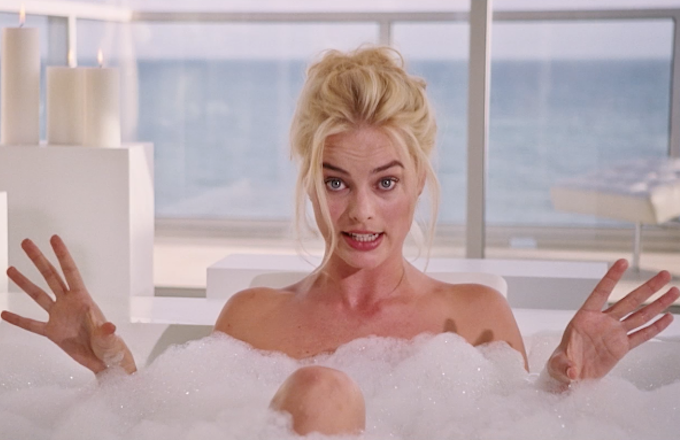
“The Big Short” is dealing with a topic that the majority of people will not understand. I sure as fuck didn’t understand it. McKay realizes how impenetrable this topic will be to most viewers. In order to prevent the story from being dry or confusing, he loads the film up with flashy elements. Characters frequently break the fourth wall, directly addressing the audience. Some times, the actors admit how fictionalized the story is. At one point, Gellar and Shipley tell the audience that events as portrayed in the film are more dramatic than what actually happened. Another minor character clarifies Jared’s statement about him, which is one of the biggest laughs in the film. When the situation gets especially convoluted, McKay pauses the plot. Margot Robbie in a bubble bath or Selena Gomez at a blackjack table appear in extended, metaphorical segments. When not being directly meta, McKay launches through the film with rocket-paced editing, musical numbers, montages, and scene breaks. Even then, I only understood about half of “The Big Short.”

“The Big Short” repeatedly reminds viewers that the film is based on a true story. Maybe fact is stranger than fiction because most of the movie’s cast is made up of talented actors playing excessively eccentric characters. Christian Bale's Burry – who never interacts with the other leads, by the way – has a glass eye, blares heavy metal when concentrating, and frequently rambles when asked questions. Bale indulges all his intensity and quirkiness. Steve Carell swears and rants, acting to the rafters. Unlike the showy Bale, at least Carell disappears into the part. Brad Pitt goes in the opposite direction, muting himself, as Ben Rickert. A conspiracy theorist and paranoid worrier, Pitt is so dialed back that he almost seems bored. The other cast members are better, less showy.

“The Big Short” is technically a comedy, albeit of the darkest variety. A problem that faced “The Other Guys” is that its subject matter was far too depressing to amuse. “The Big Short” has the same problem. The film carries a glibness about the market collapse and underhanded banking technique. The movie remains sarcastic even up towards the end, when the story plays out without the villains being punished. As “The Big Short” goes on, a dark cloud floats over the audience. The film’s lurches into drama, like Carell weeping, seem at odds with its snide tone. The most dispiriting movie I’ve seen in a while, “The Big Short” leaves the viewer fully bummed out.

“The Big Short” truly is a lecture, not a movie. Adam McKay and his cast do their damnest to convince the viewer otherwise. At times, the film is exciting or audacious.  Despite its best efforts, it can’t make the intricacies of banking and market manipulation easily understandable. It also can’t keep up a sardonic atmosphere, when the subject matter is this crushingly grim. Impressive direction/editing and some amusingly showy performances aren’t enough to make “The Big Short” a satisfying viewing experience. [6/10]