Last of the Monster Kids

Last of the Monster Kids
"LAST OF THE MONSTER KIDS" - Available Now on the Amazon Kindle Marketplace!

Monday, October 17, 2011

Halloween 2011: October 17

Silent Madness (1984)
Now my friends will know what the hell I’m talking about when I talk about faith in work pants. Bleeding Skull described “Silent Madness” as a cozy, unambitious, slasher snack. But is it, really? The plot of a mistakenly released psychotic killer returning to the sorority house where he murdered a bunch of girls decades ago is as about routine a slasher premise as you can get, but the movie does a few things a little differently.

First off, the main characters aren’t brainless teenagers preoccupied with boning. Instead, it’s a responsible, work-a-holic female doctor, bristling against the corrupt staff at the mental institution responsible for freeing pasty-faced, beady-eyed psycho Howard Johns. Belinda Montgomery gives a pretty solid performance too. She’s not just a screaming, panicking girl that succeeds mostly through luck. She’s a pretty feisty chick. Also, her newspaper editor boyfriend… preoccupied with boning. (The movie’s not that different.) The supporting cast is equally eccentric. Lisping, grouchy, antisocial Sheriff Leggitt swears, whines, barks orders, and never actually does anything to help anybody throughout the course of the film. I suppose that makes the character sound annoying, but he’s actually endearing in an anti-heroic sort of way. (His relatively small amount of screen time might help too.) Seemingly the only other person working at the newspaper, an old woman, is also kind of bitchy but similarly entertaining. The sorority sisters aren’t defined to a great deal, but they’re never annoying or actively unlikable. I imagine if the film was longer, we certainly would have found out more about them. Stack a mysterious sorority mother with a funny accent on top and you’ve got a kooky character sundae.

The corrupt hospital staff, occupied by asshole doctors and especially sleazy orderlies provide another interesting, different aspect to the film. The twist ending more then implies that it’s actually the deranged hospital attendants that are responsible for making Howard Johns a silent, murderous madman and, when ordered to silence our lead lady, they seem far too eager to get their murder on. Maybe this subplot and its characters was added just to increase the body count but, even then, it further distinguishes “Silent Madness” from the rest of the pack.

Of course, there’s lots of good old fashion murder and exploitation to be had too. The first thing Mr. Johns does upon being released is murdered a naked couple in a van and crush a rollerskating teenage girl's head in a vice. Once he makes it back to the sorority house, he makes creative use of ropes and dumbbells. When we get to the inevitable climax of the final girl (Or woman, in this case) alone in an isolated building together, the movie features an intense chase through the ventilation shafts and an unexpected twist ending that successfully changes much of the film’s plot. The movie was originally filmed in 3D and the blades, blood, and other implements comin’ right atcha ya! ups the enjoyment even more. My copy of “Silent Madness,” purchased from the VHSPS booth, even features an MST3k style stinger at the end. Perfect. Seek this one out. (7/10)


Seconds Apart (2011)
Why do I keep taking a chance on After Dark Films’ unoriginal, mean-spirited, boring little pieces of shit? The concept of psychic twins seems like a decent start for a genre film but, sigh, “Seconds Apart” doesn’t do anything but annoy and aggravate.

First off, why the fuck are all of these HorrorFest movies shot in the same goddamn style? If I have to see another shaky-cam, music-video style nightmare sequence, Jesus Christ, I don’t know what I’ll do. Beyond that, seems like most of these movies are shot in the same gloomy, blue and grey color. And the cast members are always the most generic set of vapid, pretty young things that never seem to have more then one or two emotions. When the 7 Up Yours guy is the most interesting actor in your movie, you’ve got problems. And even then, his character has the most generic fucking arc you can imagine. He’s a bitter detective with a dead wife, reoccurring nightmares, and lots of guilt. (The token alcoholism has been substituted with an inability to quit smoking.) Gee, I wonder if he’ll manage to resolve his emotional problems right around the same time he resolves the case?

I had hoped that, twins being a different kind of subject, that the characters themselves would probably be interesting, right? Nope. Thing 1 and Thing 2 are mean-spirited little pricks, indifferent little monsters, that are, as far as I can tell, trying to experiences heavy emotions like love or disgust. This is sort of funny since they don’t seem to have any problem with other, run-of-the-mill emotions. Using their telepathic abilities, they force disgusting, unlikable people to do disgusting, unlikable things like shoot themselves, fuck random strangers on video, or drive into oncoming trucks. Before long, some random girl decides she wants to bang one of the twins for seemingly no reason and, even though the girl has no discernible interests or personality, the twin decides he loves her. (And doesn’t screw when she gets all naked and slutty with him. Because he's got feelings.) Hmm, could this relationship conceivably cause a conflict between the brothers? Duh. And, hey, let's throw a little bit of incest on there too, why the hell not?

Another key ingredient to the After Dark formula of suck is an asinine, pointless twist ending. Naturally, “Seconds Apart” delivers in that capacity. Not that the twist the hack writers came up with make any fucking sense. That’s not important. All that’s important is that they totally blow your mind, man!

About the only thing positive I can say about “Seconds Apart” is that the scene of the priest pulling the worm out of his leg is kind of cool, even if its as crass and gross as everything else. Also, it's short. For the people who manage to get through all of these things every year, I salute you. You’re stronger men then me. (2/10)

Curse of Frankenstein (1957)
This is what I needed to wash the flavor of that trash out of mouth. This was my introduction to Hammer and, along with “Horror of Dracula,” defined the studio style. Right out of the gate, the movie goes out of its way to distinguish itself from the Universal Frankenstein films. Instead of focusing on the monster, it focuses on the doctor himself and would continue to throughout the whole series. The creation doesn’t even show up until well after the halfway point.

This might have been a disappointing, frustrating move if it wasn’t for one point: Peter Cushing is fantastic as Baron Frankenstein. Cushing could play both ends of the spectrum. His Van Helsing was practically a superhero, always going head to head with Lee’s Dracula and bravely battling evil in all its form. His Baron Frankenstein, on the other hand, was devious, deceptive, sadistic, and focused solely on his mission of creating life, morality be damned. Throughout this movie and its many sequels, he has no qualms about murdering or betraying anybody who gets in his way. The Baron isn’t exactly evil to begin with and the movie makes it clear that his obsession steams from his parent’s early death. But it doesn’t take him long to fall off the slippery slope. He commits murder pretty much without any pause or concern. It’s not the richest character but Cushing goes at it with gusto, creating one of the most memorable villain protagonists of all time.

The thing I noticed this time when watching is the role women play. They are heavily featured but aren’t super important to the story. Hazel Court gets a lot of screen time as Elizabeth and the movie seems to set her up as Frankenstein’s moral compass. But the doctor’s pretty much evil right from the beginning and Elizabeth doesn’t actually do much beyond get threatened by the monster at the end. The doctor even gets a mistress in the form of maid Justine, but her role is small too. If anything, it’s the almost homoerotic relationship between Frankenstein and his best bro and science buddy Paul Krempe that provides the tension. The “Frankenstein” story has always been laced with a gay subtext but its pretty evident here. Frankenstein and Krempe are devoted to each and determined to create life on their own… At least until Frankenstein’s commitment to science breaks them up. The scene of Paul and the doctor fighting over a jarred brain, which ends with Paul damaging the brain like a passive-aggressive girlfriend, plays not like one man fighting the immoral decisions of an old friend, but more like a lovers' spat.

If anything, the movie slows down some once Christopher Lee’s monster shows up. Lee gets a truly fantastic introduction and his make-up is fantastic but the creature certainly doesn’t have the pathos of Karloff’s take, if for no other reason then he doesn’t have as much to do. He’s also more generally psychotic then Karloff, as his violence is mostly unprovoked. The movie does feature a lot of the standard Hammer bright red blood but it comes mostly from the doctor’s dissections then the monster’s rampage. Even without the monster, “Curse of Frankenstein” would have been a classic, just based on the strength of Cushing’s performance. (8/10)

Sunday, October 16, 2011

Halloween 2011: October 16

Halloween 4: The Return of Michael Myers (1988)
I’m of the opinion that “Halloween” never should have been a franchise. The original’s ending was never a sequel hook. It was instead a stark evaluation of the damage done and a reinforcement of Carpenter’s favorite theme of undying evil. The near-universal love part 2 gets confuses and aggravates me. Making Laurie Michael’s long-lost little sister was a desperate, last minute reasoning for a sequel, Carpenter has admitted as much, and completely removed the random nature to Michael’s evil. It’s a bad writing phantom that has haunted this franchise ever since. The series inability to let go of such an obvious, hacky story device would eventually drag it down into incomprehensible convoluted mythology. Overall, I find most of the sequels, including this film, too samey. They all hump the corpse of Carpenter’s genius way too much. (Which, despite not really liking them, is why I still defend part three and Rob Zombie’s films. They may not be good but at least they’re different.)

So it goes without saying that “Halloween 4: The Return of Michael Myers” isn’t my favorite movie ever. The only reason I own it is because I found a double feature set of both this film and part 5 in the Wal-Mart five dollar bin and couldn’t resist such a bargain. (Especially since both films are the complete, extras-loaded special editions and not a bare-bone flipper disc as I assumed.) So I tried to clear my mind of preconceived expectations and enjoy this film on its own merits, even though it has no right existing in the first place.

First thing first, Michael Myers looks terrible in this film. The mask appears to be some god awful dime store thing and, worse yet, the actor is wearing obvious shoulder pads. Myers was never suppose to be a hulking, towering monstrosity like his slasher brethren, but, holy shit, this scrawny bastard was the best they could find? Hollywood isn’t full of imposing stuntmen? Especially since Myers is elevated into a Jason-style super-strong mega-maniac who can tear people apart with his bare hands in this film, the visual is even more unbelievable. (I have problems with that too, by the way.) The actor playing the Shape is generally a little too robotic. The movie continues the series’ reputation for forging mythology out of thin air by making Myers’ “evil” into a literal presence that can swap bodies. Dr. Loomis also gets a boost here, not-dying as hard as John McClane. Not only did he survive a fiery explosion with only a little scar on his face and hands to show for it, but, despite being well into his sixties at this point, also survives a dive out a glass window with little to no damage. (The screenwriter at least justifies the burns. On the commentary, he explains the movie originally started by showing Loomis getting blow out of the flames by the force of the explosion. There’s no such tidy explanation for the other incident.) Beyond just nitpicking logic holes in a horror sequel, I’ve always thought the movie looked very cheap. There’s not much atmosphere here.

Not that I hate the movie. There are a few clever elements. The movie has a fairly small cast and takes some time to develop its characters. Jaime would become the central plot puppy for the franchise’ middle chapters, but her sweet relationship with Rachel provides a little heart. And while the character doesn’t do much beyond being a living, breathing MacGuffin, Danielle Harris is at least a competent child actress. The teasing she receives from the kids at school provides a little depth. Kelly and Brady probably could have been indistinct slut and asshole parts but the actors at least give them a little personality. (The rivalry between Rachel and Kelly provide some humor during the slow going middle chapter.) Another thing I like is, unlike the majority of the “Friday the 13th” movies, the killings don’t take place in a vacuum. The town of Haddonfield is full of cops and trigger happy rednecks that react to the violence around them. And while I don’t really like the implications of the ending, it’s at least something different. It’s not a twist ending dependent solely on Michael not actually being dead at the last minute, as if we had any doubt. If Akkad had the guts to follow up on it, the franchise might have actually gotten interesting.

Distinguishing itself so strongly from the slasher glut also comes with a price. The movie is relatively low on the blood and features no gratuitous nudity. It might be puerile but those are the primary reasons we fans watch these films. The movie’s low on atmosphere and fun slashery, doesn’t really do anything exciting with the premise, but it’s got half a brain. I guess that’s worth something. (6.5/10)


Halloween 5: The Revenge of Michael Myers (1989)
Despite its reputation as the black-sheep of the franchise (You know, after all the other ones.), I actually kind of like this one a lot. The reasoning behind this may very well be completely nostalgic in origin. This was the first film in the “Halloween” franchise I ever saw, it was one of the first R-rated horror films I ever saw, and also one of the first slasher films I ever saw. For all of these reasons it holds something of a special place in my heart. It’s flaws are evident and easily picked out: The way Michael inexplicably escapes his very final seeming death in the previous film, the opening’s odd implication that Michael just hung out on some hermit’s couch for a year in-between movies, the way it lazily retcons away part four’s ballsy ending, how it brutally kills off one of the few “Halloween” sequel cast members you actually care about, the hilarious “cookie woman” scene, the bizarre quasi-comic scenes of a Myers in an old man mask with a hot girl kissing on him, the comic relief cops who come with a precursor to the Bunk and Skull theme, Michael’s face suddenly being a big deal, tattoos, tears, obvious reshoots and inserts, a slasher movie ending that resolves even less then usual… I think I got ‘em all. Anyway, the point is, I find all of these flaws easy to forgive for some reason.

The movie immediately fixes one of the biggest issues I had with part four: Myers doesn’t look like an asshole. Yeah, the mask has got a receding hairline and a fat neck, but it’s a major improvement over goofy-eyes from last time. Moreover, Donald Shanks is big, but not unbelievably so, and he actually carries himself with some threatening character. Jamie Lloyd is given more to do as well. Yeah, the psychic link is a bit silly but, if you’re going to play up the supernatural aspects of Michael and his connection to his niece, I prefer this over Jaime becoming the vessel for his nebulous “evil.” Danielle Harris does a good job with her imposed muteness and her performance is an improvement over part four’s.

I love Dr. Loomis. He’s my favorite character in the series. I’ve also loved the implication that he’s just as crazy and dangerous as his favorite patient. The movie plays that angle up a lot. Donald Pleasence is drunk and his scratchy voice, lack of regard for personal body space, and willingness to put a little girl in peril makes him a fantastically unbalanced protagonist. Loomis takes even more improbable damage then is possible and I adore the scene of him beating the shit out of Myers with a 2x4. Basically, get Donald Pleasence to scream raspily about THE EVIL and I’m having a good time. The rest of the cast isn’t really worth discussing, but I do like the stuttering little boy with the crush on Jaime. That’s a nice touch. (I like the anachronistic greasers too, much more then I liked them in “Friday the 13th: A New Beginning.”)

I’d say the movie is an improvement over part four in a lot of other ways too. The direction and atmosphere are better. Right from the carving pumpkin opening, the movie has more of a Halloween flavor and I like how deep and black the nights are. The gore is great in this movie and Myers is, overall, very violent and pissed-off, killing people hardcore but without sticking his fingers in people’s heads and necks. Though it never provides a satisfying reason why, Michael definitely, emphatically wants to get his hands on Jaime. Yeah, the Myers house suddenly being a mansion doesn’t make much sense but, as far as last act suspense sequences go, I’ll take part five’s laundry chute over part four’s rooftop any day of the week. Also, for what it’s worth, the movie has got absolutely the hottest sex scene of the entire series. (And lots of gratuitous cleavage for extra exploitation value.) It makes absolutely zero sense and would lead to part six having one of the messiest storylines, but at least the ending doesn’t even give the slightest illusion that the story’s actually over. I admire that level of directness. Have I made enough of a case for “Halloween 5: The Revenge of Michael Myers?” It’s not high art but it’s not like I’m looking for that either. Its light-years better then other horror part fives, that’s for sure. (7/10)


Night of the Demons 2 (1994)
Pop quiz! Which minor eighties horror franchise with a killer named “Angela” has two sequels from the dark days of horror that I vastly prefer to the original? If you answered “Sleepaway Camp,” you would be correct but “Night of the Demons” (which I will remind you is about neither ruins nor sasquatch) would also be an acceptable answer. Not to say I dislike the first film, but its horror/comedy tone is uneven and I feel like it peaks early with the rightfully famous Bauhaus dance sequence. Not necessarily a flaw, but that movie is more zombie film then slasher.

Part two fixes a lot of those issues, far as I can see. It leans far more heavily, and far more successfully, on horror/comedy then the first. It also has more of a slasher tone, with Angela engineering clever kill scenes for individual characters, and rightfully builds Angela up into the kind of iconic character she could always be. (Mimi Kinkade is hilarious, by the way.) When the movie covers her in make-up and dubs her voice over in the last act, it looses some steam. The Catholic school setting makes for an awesome, and logical, starting point. The cast and characters are really fun to be around. Mouse is the kind of meek, traumatized film character you just want to hug. Moreover, that the film’s central conflict is based out of sisterly love adds a lot of genuine tension. I really love the scene where Johnny and Bibi decide not to go all the way, I feel like that adds a lot to the characters. The movie is full of fun, smart, little character orientating sequence like that, such as the opening peeping tom sequence or the scenes of kids making out in a van. Shirley is an excellent Libby and you really can’t wait for her inevitable descent into evil. Jerry, the demonology expert, could have easily been a broad annoying character, but the movie makes him work. But, as far as memorable characters go, nothing really tops the kung-fu nun Sister Gloria (a strict Catholic nun that manages to be neither annoying nor a cliché. And in a horror film, no less!), or the deadpan, dryly humorous Father Bob.

It’s really the movie’s sense of humor I like. It successfully uses the “Evil Dead 2” model of horror sequel escalation by throwing more creativity and outrageousness at the material. You’ve got demonic naughty lipstick, grabbing tits and grabbing-tits, possession via French kissing, improvised demon smiting weapons including nunchuck rosary beads (Would that be a nunchuck? Thank you, I’m here all night), decapitation basketball, and a climatic transformation into a giant snake monster. The first movie focused heavily on how people could become demons by being attacked. This one smartly saves those antics until the finale and it provides a nice build-up. Hull House also seems much more shadow filled, cobweb infested, and generally more atmospheric then before. And, if nothing else, this one features a boatload of nudity.

Looking this movie up, I guess I shouldn’t be surprised to find it was made by the director who brought us films as varied in quality and concept as “Turkey Shoot,” “Stunt Rock,” “Dead-End Drive-In,” “Escape 2000,” “BMX Bandits,” “Leprechaun 3” AND “Leprechaun 4: In Space,” “Megiddo: The Omega Code 2,” “DC 9/11: Time of Crisis,” and “Aztec Rex.” What a weird fucking career path this guy has had. I might have to investigate further. Anyway, “Night of the Demons 2” is pretty much a blast from start to finish. I don’t like it as much as the other-other Angela, but then again, what do I like that much? (7/10)

Saturday, October 15, 2011

Halloween 2011: October 15

Masque of the Red Death (1964)
Here’s my official rankings of the best of the Poe/Cormon/Price cycle: “Fall of the House of Usher” is the most well made and put together. “Pit and the Pendulum” is my personal favorite. And this film, “Masque of the Red Death” is the most artistic. It also has the highest production values of any of the films.

It’s generally accepted that this film’s heightened artistry is a result of Nicholas Roeg, who would go on to direct impenetrable art films in the seventies, being the director of photography. While Roeg’s involvement in the film certainly contributed, especially in the movie’s brilliant use of color, Cormon was directly influenced by Bergman and other Euro-Art directors during the making of this film. It’s a gorgeous movie to look at. The scenes of characters passing through the various multi-colored rooms are fantastic. The movie’s philosophical ending and Hazel Court’s nightmare (In which she is menaced by an Aztec priest, what I think is a Turkish warrior, and an Indian kabuki actor, for seemingly no reason.) certainly makes this the trippiest of the series.

Prince Prospero is one of his Vincent Price’s nastiest roles. While he’s not as flatly sadistic as Matthew Hopkins, Prospero is unapologetically mean-spirited and enjoys torturing people both physically and psychologically. The movie’s story is pretty straight forward but pads the running time with a mini-adaptation of Poe’s “Hop-Frog” and Prospero’s wife’s attempt to sell her soul to Satan. The finale, in which the Red Death indeed makes itself known, is fantastic. Sadly, the theme of decadent rich hedonist locking themselves away from the poor, suffering masses is even more relevant now then in the sixties. (I write this as a news story about the "Occupy Wall Street" movement plays on television.) (8/10)


The Premature Burial (1962)
This movie suffers greatly from the lack of Vincent Price. Ray Millard certainly isn’t a bad actor. (The fact that I’m more of a fan of “X” instead of the melodramatic “Lost Weekend” should surprise nobody reading this.) But he’s a little too morose and bipolar in this part. It’s very easy to see how much better Price would have played this role, especially during Guy’s climatic descent into madness.

It’s obvious from very early on that the people around our main character are attempting to gaslight him. It’s pretty obvious who’s responsible too, despite the abundant red herrings. The scene of our protagonist showing off his various insurance plans in case he’s buried alive (Spring-loaded coffin lid, poison, dynamite?) is oddly jovial and never pays off. There’s a psychedelic nightmare sequence very similar to the one in “Masque of the Red Death,” right down to the green tinting. When the titular premature burial inevitably happens, any of the dread it could have produced is undermined by the somewhat goofy voice-over. (Though the shot of Millard’s face being covered with dirt is pretty cool.) After being exhumed by Chekov’s Graverobbers, the now completely mad Guy goes about offing the people responsible for his entombing, in a somewhat proto-slasher sort of way. The movie does have some fantastically foggy atmosphere and isn’t without a few decent jump scares. But it’s easily the weakest of Roger Cormon’s Poe adaptations. (6/10)


The Town That Dreaded Sundown (1976)
Generally regarded as something of an out-of-print classic, “The Town That Dreaded Sundown” plays almost like a feature length episode of “Unsolved Mysteries.” It claims to tell the true story of the Phantom Killer that terrorized Texarkana, Arkansas in 1946. A dramatic narrator chimes in throughout while the majority of the film is composed of what are essentially dramatic reenactments. This method isn’t always successful, especially in the scenes revolving around the police investigation. The director, Charles B. Pierce, plays a bizarre comic relief character named, god help us, “Sparkplug.” This character is straight-up Barney Fife and his broad, slapstick antics, which included crossdressing, are a serious distractions from the mood. Likewise, Ben Johnson’s over-the-top performance as a cowboy hat sporting police captain called onto the case seem to intentionally clash with the docu-drama tone.

But the movie is well-remembered for the scenes recreating the Phantom Killer’s night time assaults. Stepping right out of an urban legend, the Phantom attacks a necking teenage couple at a Lover’s Lane. Later on, the Phantom chases an innocent victim, played by Dawn “Mary Ann” Welles, through the woods. Once he has her pinned down, he tortures her with a trombone, in a particularly surreal, unsettling moment. The most frightening sequence actually takes place in a brightly lit room, as the killer shoots a man through a window and then chases his wife through a cornfield. The appearance of the killer undoubtedly influenced eighties slashers. The simple white hood over his head was copied in “Friday the 13 Part 2” while the killer’s steady, rhythmic breathing, in which his breath sucks the front of the hood in and out, might have influenced Michael Meyer’s similar heavy breathing. It’s often been said that the faceless mask horror movie villains wear are meant to block their human features, so the audience can’t relate any emotions or feelings to them. I’ve never put much credence in that theory, but it totally happens here. The killer and his white featureless face are truly the stuff of nightmares.

The film does a great job of illustrating the panic and dread the town feels as the murders carry on. I also love the final chase through the swamp, where the Phantom literally disappears into legend. While the mockumentry style hampers the film in some ways, the night time attack scenes are shocking, startling horror stuff. I give this one a hearty recommendation and will probably have to see the same director’s similar, earlier “The Legend of Boogey Creek.” (7/10)

Friday, October 14, 2011

Halloween 2011: October 14

Deep Star Six (1989)
So what was going on in 1989 that so many underwater set sci-fi/horror films came out? Was everyone just racing to rip off “The Abyss?” Was there some sort of news story or cultural event that influenced this? Anyway, “Deep Star Six” has a lot in common with another one of the films released the same year, “Leviathan.” While Cameron was going for something a lot more cerebral, these movies were content to be simple B-movie monster flicks. Both films are about a group of blue-collar scientists (A lot like “Alien,” undoubtedly an influence.) and workers stuck in a research lab at the bottom of the ocean before uncovering some ancient, possibly alien threat, that invades and destroys the lab. Spoiler alert ahead, both films even end in startlingly similar ways, with a duo of survivors abandoning the lab and floating to the surface where, of course, the monster follows them, resulting in a fatal explosion.

Both films have pretty strong ensemble casts, though “Leviathan” wins since it has Robocop, Col. Troutman, and a Ghostbuster in it. The best this movie can muster is Agent Albert Rosenfeld. The creature designs are kind of evenly split though. “Leviathan” had Stan Winston in its corner and featured some cool, giant shifting mass of body-horror, but that was abandoned in the end in favor of a cheesy fish-monster. “Deep Star Six” features one pissed-off giant lobster thing. While the monster is kind of cumbersome, it’s not a bad design and is brought to life believably. It’s also not as featured as much. The film instead focuses on the hazard of a deep sea ship for its first half. “Deep Star Six” is also the gorier film, featuring an aquanaunt bitten in half and a dude exploding upon depressurization.

Also like “Leviathan,” the movie really doesn’t do anything interesting or new. It’s a simple creature feature with a sci-fi slant. The most exciting moments in the movie are watching Miguel Ferrer go crazy. I can’t really say that you should really go out and see “Leviathan” in favor of seeing “Deep Star Six” instead, since neither film are really worth seeing all that much. But, if you want to see a giant lobster kill some folks, some beautiful underwater photography, and also be able to see what else Sean S. Cunningham has ever been up to, it’s worth checking out, I guess. (6/10)


Burnt Offerings (1976)
An interesting subversion of the traditional ghost story. This isn’t the story of a house that’s haunted, so much as it is the story of a house that haunts people. The sprawling, gothic manner is a living entity onto itself. It seems to live off the life force of the new family that moves in, slowly regenerating its old, run-down appearance, with the eventual goal of outright absorbing the family into its walls. The movie is intentionally mysterious, leaving much of its mythology up to the viewer to figure out.

My biggest issue with the haunted house genre is, “Why don’t the people just leave?” The movie gets around this by having mother (a very capable Karen Black) immediately smitten and possessed by the house. Despite the protest of father (Oliver Reed at his blustery best), son, and great-aunt (a very entertaining Bette Davis), the family stays in the house, even after it becomes apparent how much of a threat it is to their lives. When they do finally try to leave, the home physically, intentionally blocks their escape with a downed tree. The house’s intentions are carried out subtly. When we do see creaking doors or creeping vines, its long after the creepy slow-burn has settled in. Before revealing the truth, the movie suggests that the supernatural going-ons could just as easily be explained with mental illness or bitterness slipping into an old marriage. (Indeed, the movie could easily be read as a metaphor for a marriage going bad, since it’s about discovering your loved one is literally a different person.)

Suspense and scares are supplied throughout. A playful underwater episode between father and son unexpectedly turns deadly. Later on, the pool proves fatal again, but now the parents are forced to watch, helpless to do anything about. In the film’s most famous scenes, Reed’s reoccurring nightmares about a ghoulish, smiling chauffer at his mother’s funeral bleed over into reality in a fantastically creepy set of sequences. The movie ends bleakly, with a nose-dive out a window and into a windshield, and spares nobody. While writer/director Dan Curtis is best known for television work, “Burnt Offerings” is free of stale, TV style staging. It’s a mysterious, creepy, and unique take on the haunted house concept. (7/10)


Tales from the Hood (1995)
One of the earliest entries in the “urban horror” subgenre. (Though “Candyman” came first, and the sub-genre is just a natural evolution of the seventies blaxploitation films.) As soon as I saw Spike Lee’s name in the credits, I knew to expect something a little more sophisticated then, say, “Snoop Dog’s Hood of Horror.” The movie does a good job of combining classic EC Comics/Amicus tropes with socially conscious material and an inner-city perspective.

The first story tells the classic “Revenge from Beyond the Grave” style tale, but the trigger for the revenge is a Rodney King style beating, in which an innocent black man is beaten to death by a trio of drug-pushing, sadistic white cops. The revenge is often ironic and the segment features some top-notch zombie make-up. The second story has the trappings of both a “Strange Child” and “Monster in the Closet” story, but handles the issue of child abuse. The disturbing subject matter is told in up-close, queasy detail. Perhaps too close, considering the overall tone of the film and the magical conclusion. And, boy, is this not your typical David Allen Grier performance.

The third story is the obligatory killer doll segment. It directly references “The Trilogy of Terror” with the chattering, sharp-teeth monster dolls, but their target is a racist white politician (played nicely by Corbin Benson) whose campaign falls back on the ol’ “Affirmative Action is reverse-racism!” bullshit. The dolls are brought to life in stop-motion Full Moon style and this part of the film proves the most entertaining. The last story builds on the “Strange Experiments” archetype, but mainly discusses the motivation behind gang violence. A murderous thug, after being imprisoned, is forced into an odd “A Clockwork Orange” style experiment, directly confronting him with his own violence. It’s definitely the strangest part of the movie.

There’s a framing story too, of a trio of hoods breaking into a funeral home and trying to buy drugs from a strange, story-telling mortician. Anybody who’s ever seen a horror anthology before can quickly figure out where this is going. (It’s like there’s a rule list you have to follow to get one made.) Clarence Williams III sure has a blast as the storyteller though and the movie nicely ties its framing device into one of the stories.

While the themes of racism and violence might seem urban-centric, they are obviously universal and the movie knows this. Mixing horror with the gangster rap culture certainly makes a lot of sense, considering both have a preoccupation with death. (The opening image of a skeleton wearing sunglasses, a doo-rag, and holding a joint and a gat is only partially ironic.) Christopher Young’s gothic score is nicely ominous and his use of European violins would crop up again later in his superior “Drag Me to Hell” score. While I would hardly call it a classic, this movie is ultimately a lot smarter then it gets credit for. I’d recommend it to both Amicus and Spike Lee fans. (7/10)


The Black Scorpion (1957)
I haven’t seen this one since I was a young kid. I remember liking it enough at the time. While I previously stated I wasn’t super crazy about fifties sci-fi/horror in general, I do like some of the giant bug flicks. Insects and arachnids are naturally repugnant, so super-sized insects and arachnids makes them perfect horror film subjects. This movie almost completely forgoes sci-fi elements in general, instead playing out like a hybrid of westerns and strange land adventure fiction, with the giant bugs being the thing that holds it all together. There’s no radiation, atom bombs, or mad science anywhere in the film. (The cliché of radiation making normal animals into giant sized killers doesn’t apply to the majority of the sub-genre’s films, anyway.) The movie owes more to “King Kong” then “Them.”

Obvious segue here, but the “Kong” connection is even deeper then that. The movie is most notable for being Willis O’Brien’s other giant killer creature feature. When our scientist and cowboy hero lower themselves into the volcano that released the titular scorpions, they find themselves in a wild, savage world, inhabit with giant insectoids. It’s believed that this sequence was a recycling of the infamous “Spider Pit” sequence that was cut from “Kong” for being too disturbing at the time. (Those who watched the WETA Effects reconstruction of the Spider Pit scene that’s on the special edition “King Kong’ DVD will recognize the tentacled, weird worm creature that briefly appears here.) In the final act, the killer scorpion even derails a train. The giant animatronic scorpion head used throughout recalls a similar prop from “Kong” as well.

The movie certainly isn’t in the same league as that classic, but it does deliver on the simple pleasure of a giant killer bug flick. O’Brien’s stop-motion work is fantastic, as expected. The movie’s tone veers more towards horror. The sequence where the giant scorpion chases a fleeing man up a telephone pole generates some suspense. If nothing else, the Scorpion’s desire to just fucking kill everything in its way makes it a viable, memorable threat. And while the Mexican setting doesn’t afford the kind of collateral damage New York does, it does create a unique, South of the Border atmosphere.

The romantic subplots in these films are usually a drag, but Richard Denning and Mara Cordey actually have a nice chemistry together and their catty dialogue makes the dating scenes entertaining. (Even if they do feel like they’re from a different movie.) The movie relies far too much on stock-footage, reusing the expensive stop-motion scenes over and over again. O’Brian’s great creature effects are latter ditched in favor of unconvincing rear-projection work. There’s also an annoying kid that exist solely to be put in peril. (Luckily he gets out of the way for the finale.) I’d say “Black Scorpion” is a minor classic of the short-lived big bug fad. It has a enough unique elements to rise above the pack. (7/10)

Thursday, October 13, 2011

Halloween 2011: October 13

10 to Midnight (1983)
It didn’t take long for the conventions of the slasher movie to trickle down into other genres. Considering that gritty crime stories, action movies, and horror probably all share the same audience, it really shouldn’t be a surprise that movies like this or the similarly themed “Cobra” (which features an entire cult of brutal knife-nuts) cropped up pretty quickly. “10 to Midnight” is basically “Dirty Harry” multiplied by itself. The hero is even more uncompromisingly conservative. The villain is even more crazy and vicious. The movie is even sleazier.

Charles Bronson had kind of an odd career path. He was a work-a-day character actor for a long time, grabbing a couple of decent roles here and there, before “Death Wish” happened and completely solidified his career. From that point on, he played the exact same role in each movie, a stern-faced enforcer of old-fashion ethics who strikes back against an ineffective society by taking the law into his own hands, preferably by popping a punk or two. Bronson’s performance is actually a little more involved then usual. He’s playing the same character he always does, of course, but he actually seems to have an iota of emotional investment in the material, as opposed to his usual stone-faced determination.

Gene Davis gives a really bizarre performance as the killer. His dialogue is often spoken stiltedly. The guy acts like a whiny, petulant child half of the time. He puts on a fake Spanish accent, has a giant picture of himself in a karate gi on his wall, hits on women in the most uncomfortable way imaginable, and never gives Bronson or the audience doubts that he’s anything but a complete creep and a total psychopath. The movie is so blatant that his murderous rage stems from oppressed, twisted sexuality that Bronson even says as much almost immediately. (Most movies would be content with simply implying that the killer’s knife is his dick, instead of out-right saying as much.) This all leads to the movie’s main gimmick, which is that the villain does all his stalking and slashing completely in the buff. There is so much bare man-ass in this movie, and almost as much wobbling wang. His targets are exclusively young, female, busty, and usually naked. Fucking, showering, or undressing is often interrupted only by brutal stabbings. The movie’s tidal wave of misogyny peaks with the Richard Speck-inspired finale, where the killer massacres an apartment full of nurses.

Despite a decent Bronson performance, enough slashing to satisfy the gorehound, and an intense finale, “10 to Midnight” is just a bit too mean-spirited and ugly to be enjoyable. It’s free of eighties camp. (6/10)


To the Devil a Daughter (1976)
What an inauspicious way for Hammer Studios to go out. “To the Devil a Daughter” wound up being their final film production. The studio finally broke with its period settings to make a modern story of demonic influence, obviously an attempt to jump on the Devil stories trend that was popular in the mid-seventies. The results are unfortunately droll. The story essentially boils down to an occult writer (Richard Widmark) and a Satanist priest (Christopher Lee) battling for control of an innocent young girl (Nastassja Kinski), who is destined to be the Earthly avatar of the demon Astaroth. However, Widmark and Lee never even come face-to-face until the end of the movie. Lee spends the majority of the run time staring off-screen, while people in other rooms get murdered or burst into to flames or, in the film’s highest camp moment, a glowing image of Lee’s face appears above a window. Scratch that. The movie’s campiest moment is the Satanic ritual where the symbol of Astaroth, a golden statue doing a split on an inverted cross, is moved suggestively over Kinski’s prone body, while an orgy breaks out around her, including Christopher Lee’s naked ass. (Thanks for that one, movie.)

Widmark proves to be an overly literary, uninvolving protagonist. He spends large portions of the film talking on the phone or looking at a book. Lee actually does an okay job as another villain. It’s certainly a more involved performance then his last few go-arounds as Dracula, but his character doesn’t have much to do. Kinski would bloom into perhaps the most beautiful woman in the world in a few years (And does some gratuitous full frontal here. Not a complaint) but her performance is a bit on the sleepy side.

The film ends on an almost hilariously anti-climatic note. Lee has captured Kinski and is ready to transfer the demon’s spirit into her body, the altar surrounded by a magic circle of protective blood. Widmark walks up to him, the two argue over confusing mythology for a while, Widmark throws a small rock at Lee’s head, picks up the girl, and walks off. That’s it. And I thought Lee getting killed by a magic bush in “The Satanic Rites of Dracula” was an undignified death scene.

When “To the Devil a Daughter’ isn’t being boring, it’s being overly icky, like the extended sequence of the demonic baby (which looks like a bloody bear fetus) performing cunnilingus on an all too willing Kinski. The movie also wastes a great supporting cast, including Denholm Elliot and Honor Blackman. The movie is all the more disappointing since it wound up being the original Hammer Studio’s final offering. (4/10)


How to be a Serial Killer (2008)
Kind of like “Henry: Portrait of a Serial Killer,” if “Henry” was a comedy. It has a similar story, of a veteran serial killer taking on an apprentice and teaching him the modes of murders. The big difference is that Mike is an up-beat can-do kind of guy, who uses serial killing to make the world a better place, while his student Bart is willing but kind of reluctant.

One of the really interesting aspects of the film is there are “instructional,” inspirational speaker style interludes with Mike, done in the style of a late night infomercial, often commenting on or reinforcing the plot. Even odder insertions are documentary style interviews with many of the supporting characters. You’d think these out-of-stories moments would disrupt the story’s pace but, surprisingly, they don’t. Instead, they reinforce the wryly comical tone.

Midway through the film, a major supporting character is killed off, rather unexpectedly and off-screen. In a sequence somewhat reminiscent of “American Psycho,” Mike, in order to cover up one witness, ends up having to kill every single person in his apartment complex. After this sudden story move, the movie is never quite as amusing as it was before. Most of this is forgiven once the conclusion, which is blatantly sympathetic to our serial killer, comes around. I really didn’t have a lot of expectations for “How to be a Serial Killer” but it’s pretty clever. (7/10)


Scissors (1991)
After reading a review on Kindertrauma, I decided to give this film a look, one I probably wouldn’t have check out otherwise. “Scissors” is a mess, but it’s hysterical, high-camp tone makes it an entertaining mess. Sharon Stone plays a repressed, doll-collecting, emotionally disturbed 26-year old virgin. (Take a moment to stifle your laughter.) After being assaulted by a red-bearded man in an elevator, and fending him off with a pair of scissors, she takes comfort in the arms of her neighbor, a gentle, kind of nerdy soap actor played by Steven Railsback. Sadly, the neighbor has got a creepy, paraplegic twin brother, also played by Railsback. In the first few minutes of the film, Stone has her butt patted by an overly friendly shop owner and, from that point on, the movie goes to great lengths to point out Stone’s sexual repression. Her relationship with the good brother and her fear, paranoia, and antagonistic relationship with the creepy brother dominates the first 45 minutes of the film. Despite so much attention being paid to it, this subplot turns out to be nothing but a red harring, building up to nothing, and never quite gets resolved.

Almost half way over with does the movie actually get to its point, with Stone locked in a strange apartment, with a dead body, a talking raven, bolted down furniture, a miniature version of the city that has a pre-recorded message over it, and televisions that play back her memories. It doesn’t take long for her to go completely nuts. If you pay attention to which actors get billing, it won’t be hard to figure out who’s really behind all of this.

Stone’s performance is wide-eyed, shrill, and becomes increasingly hysterical as the movie goes on. Railsback hams it up as the creepy brother while Ronny Cox sleepwalks through a supporting role. The score is as bombastic as anything else in the movie, but its main theme is actually a bit on the creepy side. The film’s lurid set design is colorful and interesting. Though it seems to take a long time to get there, the ironic ending is pretty amusing. “Scissors” certainly isn’t a good film but I don’t regret watching it. It’s not quite like anything else you’ll see. (6/10)

Wednesday, October 12, 2011

Halloween 2011: October 12

Nude for Satan (1974)
The movie doesn’t deliver on its title. Oh there’s plenty of nudity. But Satan is a no show. The story begins like so many horror stories do: A car crash, which occurs off-screen, forces a couple, in this case complete strangers, to seek lodging in a strange house, in this case a vaguely gothic castle. The dude with the crazy sideburns stumbles inside, while the lady remains comatose. A cryptic guy in a black cape appears and then disappears, there’s an old book, Astaroth gets name-checked, and then some random nudity.

The next morning, our female protagonist awakes, wanders the castle, and encounters some guy in evening wear. When he first sees her, he immediately gets a psychedelic shot of her in the buff. Side-burns dude soon runs into a version of the girl that dresses in antiquated fashion and is overly horny. After a random lesbian encounter in the shower, the chick runs into an equally horny old-timey version of the dude. Boning ensues. Meanwhile, the woman dreams of another unexplained lesbian encounter, we get a sequence of some unidentified woman being whipped and then sacrificed at some sort of ritual. Not long after, the lady (the car crash survivor) falls into a giant spider-web and is menaced by the fakest looking damn spider I have ever seen in a horror movie.

Yes, there are deviant doubles of both of our main characters running around the castle. But don’t ask why. Our couple (the non-lecherous versions) attempt to leave the castle, but evening-wear guy suddenly appears in a shattered mirror and tells them to stay. Honestly, that would probably make me want to leave more. There’s also a scene of Side-Burns running around the castle grounds for a long time that I’ll admit to not understanding at all.

We get a half-way explanation of just what the hell is going on and then, for the climax, the movie descends into totally incomprehensible sleazy Euro-art weirdness. Men in loincloths, half of their body painted red and the other half blue, appear out of nowhere and dance around, along with a pair of naked ladies in see-through gowns. I’d assume these ladies are spirits or demons or something, especially since the one girl’s rip cage sticks out disturbingly far. (That’s not a special effect.) But I don’t think spirits have tan-lines. And, yes, if it wasn’t blatantly obvious from the beginning, the movie ends with a stable time-loop… I think.

All of this is dubbed too, by the way, with the high standard audio work you generally associate with seventies euro-sleaze. To add to the incoherence, the DVD starts with a long company logo composed of a naked lady with breast implants getting bitten by a vampire(?) with fuzzy TV-static eyes. The only hint that this is a DVD logo and not the actual movie is that this footage was obviously shot on digital video. “Nude for Satan” is kind of boring truthfully, not quite the hilarious sleaze-fest the title implies, but it does have just enough what-the-fuckery to be worth seeing, preferably late at night while extremely drunk. (5/10)


Genesis (1998)
I saw Nacho Cerda’s “Aftermath” some time ago. That movie might have a reputation as a shock film (And is certainly only for the strong stomached.) but there was ultimately an artistry and a point behind the carnage on-screen. Though “Genesis” is definitely more polished, it lacks the visceral gut-punch reaction “Aftermath” had. Like that film, it’s dialogue-free. The set direction is effectively dank and gloomy. The story, of an artist and his sculpture slowly trading places, is rife with symbolism.

The film never out-right states but instead visually illustrates that this is a husband making a sculpture of his dead wife. His nightmares, showing a burnt-out car and shot in a jittery metal-video “Saw” style, nail that point home a little too hard. And, honestly, considering Cerda’s obvious visual strength, it’s disappointing that he’d rely on such a tired, obnoxious style for even a small portion of the film. Despite the lack of dialogue, the movie’s sound design is top notch, as is its melancholy score.

“Genesis” is less exciting then “Aftermath.” That film portrayed its message about death and the living’s relation to it in a naturalistic, if graphic, manner. In comparison, “Genesis” seems like more typical art-school (pun), foreign made short film abstractness. It’s still good but Cerda’s next film “The Abandoned”, his first and only feature, would fall into the same trap of relying more on surreal asides and tone then anything else. (7/10)

Blood and Roses (1960)
The first screen adaptation of “Carmilla,” the prototypal lesbian vampire novel, this is pretty soft on the lesbian content. For a fact, Carmilla seems more attracted to her best friend’s finance then the girl herself. The movie is character-based and focuses on Carmilla’s duel personality and loneliness, displayed through an inner monologue. The movie climaxes with a surreal dream sequence and there’s a framing device, discussing the nature of myths. The movie is pretty slow and I’ll admit to preferring Hammer’s later sex-and-violence laden adaptations of the same material, but the thick atmosphere and interesting execution makes this a recommendation. (7/10)

Tuesday, October 11, 2011

Halloween 2011: October 11

The War Game (1965)
A different kind of horror movie. Though the threat of Cold War nuclear annihilation is a fear mostly belonging to the previous generation, growing up as a teenager in the post-9/11 world certainly created its own paranoia that my normal, simple life could be vastly disrupted and destroyed any minute now by international forces beyond my control. As a kid I was obsessed with the end of the world and nuclear war anyway, mostly because of my Dad showing me “The Day After” at far too young an age.

Anyway, “The War Game” did it first. (And better.) The story behind the film, how it was created for the BBC but ultimately banned from television and then went on to somehow win the Best Documentary Oscar that year, despite being a film composed entirely of dramatic reenactments of hypothetical scenarios (In other words, completely fictional), is well-known.

Though the movie threatens to go over into camp in a few scenes, such as the flaming living room sequence, the sterile, withdrawn documentary style and impassionate narration keeps the film grounded. What’s really interesting here is once the film moves on from the initial bomb strike to the aftermath. The majority of films about this subject seem to focus on small groups surviving in the desolation, or society immediately breaking down into tribes of crazed cannibals. Here the break-down of society works much slower. The government and police force continue to exist, even in the face of the dead, the severely burnt, the insane, and eventual food riots. The sights of whole crowds of people burnt char black or cops terminating the suffering and dragging the dead to piles, are quite harrowing. The movie is disquieting, especially since it doesn’t even pretend to suggest that any sort of happy ending is possible. (I wonder if this film influenced the nihilistic sci-fi of the seventies.) While I usually don’t believe in altering films after the fact, a newly added postscript briefly discussing how there’s even more nuclear weapons in the world now and how, even though nobody talks about it much, a disaster as displayed in this film is still very much possible, would be an appropriate addition. This is the first Peter Watkins film I’ve seen. He seems to be a pretty interesting filmmaker. “Punishment Park” is now on my list of stuff to see. (8/10)
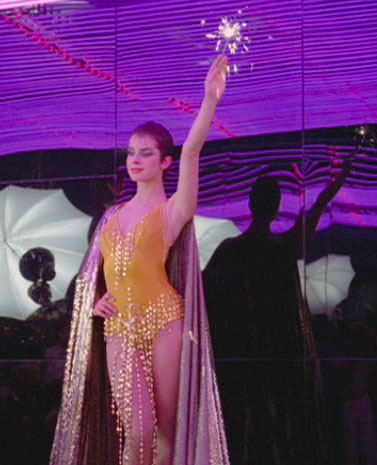
The Monster That Challenged the World (1957)
Many classic horror fans love the sci-fi/horror creature feature/giant bug movies from the 1950s. (Probably due to nostalgia, since these types of movies use to be the bread and butter of Friday night monster shows. You know, back when those existed.) While I certainly don’t dislike the subgenre (And I love a few of the individual films), it’s never resonated with me as strongly. The heroes of these films are often military men or scientists (unless it’s one of the movies were the scientist are tampering in God’s domain.) or other similar voices of authority. Compared to the monsters, victims, and mad scientists of the 1930/40s Golden Age, I can’t really relate as much. That’s my main problem with “The Monster That Challenged the World.” Not only are its heroes all stationed on a military base, its main character is a boring hard-ass middle age guy.

The most interesting characters in the film are the least featured: The mother who has to deal with her rebellious daughter and then the death of said daughter, the highly eccentric bookkeeper, or the morgue attendant who keeps sandwiches in the cold lockers. The title monsters are also giant killer sea mollusks. While the creature effects are honestly quite good, it’s hard to get over the fact that we’re essentially fighting slugs here. The monster(s) don’t exactly challenge the world either, though I suppose “The Monsters That Challenged the Salton Sea and its General Surrounding Areas” isn’t as catchy a title.

An egg containing one of the monsters is captured early on and kept in the laboratory, waiting for the last act when it can be revived and menace an isolated woman. This is forgivable, the kind of genre conventions one comes to accept. However, one of the characters being directly responsible for releasing the monster (In this case, a little girl wanting to warm up some bunny rabbits) is less forgivable. The movie is pretty fast-paced and never drags, even if the monsters aren’t actually on-screen much. But I don’t think I’ll be revisiting this one. (5/10)

Elvira: Mistress of the Dark (1988)
Fate was clearly conspiring to get me to watch this movie. Two separate people mentioned Cassandra Peterson’s trademark character to me within 24 hours of each other and, look at that, the movie’s right there on Netflix Instant. To tell you the truth, the peak of Elvira’s popularity was a bit before my time and we never got her show down in my part of the country. But, as a fan of both horror movies and cleavage, her act is tailor-made for me.

The movie is a pretty entertaining little piece of goof-ball comedy. The story, of a wacky outsider coming into a strait-lace town of squares and shaking things up is pretty standard eighties screwball comedy. (Even older then that, honestly.) The movie does shake things up with a witchcraft subplot, a snake hand puppet in a casserole pot, and bits taken straight from Elvira’s show. (And some “Attack of the Killer Tomatoes” too.) Though her gimmick might seem pretty simple, Peterson really does have a way with a one-liner and sharp comedic timing. It’s sort of a shame that a character as arguably one-note as Elvira has dominated her career. Born thirty years earlier, she could have been a vaudeville superstar.

As for the film itself, “Elvira: Mistress of the Dark” knows who its central audience is. Aside from all the blatant fanservice and lecherous lingering shots of Peterson’s body, the movie is a breezy little slapstick comedy full of plenty of quick gags, including everything from punk-rock poodles to random Rambo references. As the movie’s supernatural plot comes to a resolution at the end, the movie looses some steam, but it makes up for a lot with the closing Vegas show tune. The movie’s certainly not very smart, it’s fair to say it’s pretty dumb, but it’s a ready made guilty pleasure if I’ve ever seen one. (7/10)

Deranged (1974)
Though he’s inspired many films, books, and rock albums, very few productions actually set out to accurately adapted the life, times, and deaths of Ed Gein. Though “Deranged” certainly takes its fair share of liberties, it sticks to the facts far more then similar takes on the story do. Written and co-directed by Alan Oamsley of “Children Shouldn’t Play with Dead Things” fame, the film has an odd framing device. A reporter pops into the film at pivotal moments, explaining certain details. While he never interacts with the action, he does stand in the shot, as if he was there.

Considering the nasty details of the real life case, I wasn’t sure what to expect from the film. The opening scene has Ezra Cobb, our Gein surrogate, forcing his dying mother to eat spoonfuls of pea soup, that are soon filled with blood. The somewhat disturbing opening jives with the rest of the film, which is practically a full-fledged comedy. Most of the humor derives from Robert Blossoms’ lead performance. Best known as the creepy old man next door in the original “Home Alone,” and who just passed away recently, Blossoms is likablely kooky. His eyes stare ahead unfocused while he mutters, stutters, and generally wanders around, acting as if he’s in another universe. Blossoms seems legitimately disturbed. There are other blatantly comical elements, like an old fat woman prone to séances or the way his friends laugh off Ezra’s insanity, completely unaware of the lunatic in their midst.

Despite the countless grindhouses and drive-ins it undoubtedly played in, “Deranged” actually shies away from Gein’s oddest tendencies. While there’s plenty of grave robbing, Cobb never actually wears a skin-suit stitched together from dead flesh and Gein’s necrophilic-transvestitism is hardly touched on. The first murder doesn’t occur until after the one hour point. These aren’t negatives. The film takes its time and seems more interested in exploring Gein’s odd world then indulging in his depravity. I much prefer it over the later, ostensibly more accurate “In the Light of the Moon,” if for no other reason then this movie doesn’t feature the spectre of Gein’s dead mother commanding him to kill. “Deranged” is odd enough, sick enough, and well made enough to be actually earn the title of cult classic. (7/10)